Author: Ian from WorldDeer.org

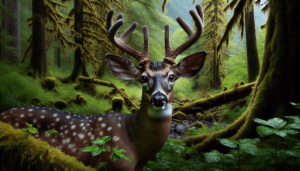
Produce an image capturing professional wildlife photography representative of a Columbia Blacktail Deer in its natural habitat. The scene should depict the deer in a lush forest environment, illustrating why it is often considered the ultimate wildlife hunt. The deer should be the focal point, embodying intricate details from its spotted coat to its branching antlers. Portray a serene, untouched wilderness without human intervention, including no text items, brand names, or logos. Make it feel as though the viewer is looking directly into the untouched, beautiful world of the deer.

Blacktail Deer vs Whitetail Deer

Updated on September 7, 2026. Blacktail deer White-tailed deer Size Columbian blacktail bucks commonly 100–200 lb live; Sitka often 100–150. NDA: adult bucks average up to about 140 lb. Compact, built for brush. Typical adults about 90–300 lb. Northern farm
Read More »
Create a wildlife scene that could be fit for professional photography. The focus of the image should be on deer and moose in a fall setting. Depict the animals as active, perhaps foraging or prancing around in the height of their day. The environment should include autumn foliage, fallen leaves, and the fading warm hues of the fall season. Please avoid including any human presence, text, brand names, and logos in the image, ensuring that the raw beauty and sincerity of nature is captured with utmost vividity.

Can Moose Swim?

Yes — moose are excellent swimmers. Despite weighing as much as a horse, a moose can swim at around 6 miles per hour, keep swimming for miles at a stretch, and even dive well below the surface to feed on

Read More »
How Much Meat From a Deer

How Much Does a Fawn Weigh?

A newborn white-tailed deer fawn typically weighs between 4 and 8 pounds (about 2 to 3.5 kilograms), with most healthy singles landing around 6 to 8 pounds and twins usually a bit lighter, often 4 to 6 pounds each. For

Read More »
A detail-oriented depiction of a deer in its natural environment, standing majestically with a magnificent antler rack in full display.

Why Do Deer Have White Tails?

Deer have white tails primarily for communication. When a white-tailed deer senses danger, it snaps its tail upright and fans the long white hairs on the underside and rump, creating a bright flash called “flagging” that is visible even in

Read More »
A detail-oriented depiction of a deer in its natural environment, standing majestically with a magnificent antler rack in full display.

Do Deer Eat Azaleas? (Yes — Despite the Toxins)

Updated on September 7, 2026 Yes. Evergreen azaleas are deer candy in winter. Rutgers rates evergreen azaleas Frequently Severely Damaged (D) — the same bucket as hostas. Cornell’s woody list splits the genus: evergreen azaleas and pinxterbloom sit with yew

Read More »
It's just before dawn, when the forest is awash with soft, muted colors of the first light.

When Do Moose Shed Their Antlers?

Moose shed their antlers once a year, mostly between late November and January, with mature bulls dropping their racks earliest and young bulls sometimes carrying theirs into February or March. The shed is triggered by falling testosterone after the autumn

Read More »
Illustrate a serene forest scenery where an Axis deer, also known as a Chital, can be seen exploring. The deer bears its distinctively sleek, golden-brown coat dotted with white spots bringing elegance to its movements. It's outdoors during daytime, parading amidst a thick grove of trees draped in greenery, and clusters of wildflowers blooming vibrantly under the warm sunlight. A distant brook quietly murmurs, completing the tranquil wilderness, and no people or human-made items like brand names and logos are present. Capture this moment of undisturbed wildlife.

Axis Deer vs Whitetail Deer

Updated on September 7, 2026. Adult axis deer (chital) keep white spots. Adult white-tailed deer do not. That is the ID. The hunt split is legal and calendar: Texas treats axis as an exotic with no closed season on private

Read More »
A detail-oriented depiction of a deer in its natural environment, standing majestically with a magnificent antler rack in full display.

Do Deer Eat Sedum?

Updated on September 7, 2026. Ratings below are university browse lists, not a nursery tag that says “deer-resistant sedum.” Confirm the current lists on the linked extension pages before you fill a dry slope with Autumn Joy and call the

Read More »
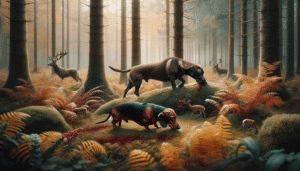
A setting in a forest, where a Dachshund and a Labrador Retriever are in the process of blood tracking.

Where Do Elk Live?

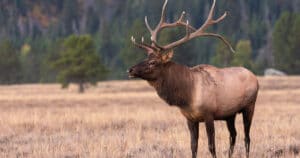
Today, most of North America’s elk live in the western United States and Canada, from the Rocky Mountains and Pacific Northwest down through the high country of Arizona and New Mexico. Smaller reintroduced herds now thrive in eastern states including

Read More »
It's just before dawn, when the forest is awash with soft, muted colors of the first light.

When Can Fawns Walk?

Fawns can stand on their own within about 20 to 30 minutes of being born, and most can walk, unsteadily, within a few hours. By the end of their first day, a healthy fawn can follow its mother short distances

Read More »
A detail-oriented depiction of a deer in its natural environment, standing majestically with a magnificent antler rack in full display.

Why Do Deer Snort?

Deer snort, or “blow,” mainly as an alarm signal. When a deer detects something suspicious, it forcefully expels air through its nostrils, producing a loud, sharp whoosh that can carry a long way through the woods. The blow serves several

Read More »
How Much Meat From a Deer

How Much Does a Moose Weigh?

An adult moose typically weighs between about 600 and 1,500 pounds (roughly 270 to 700 kilograms), with bulls generally weighing 840 to 1,500 pounds and cows 440 to 1,080 pounds. Exactly where a moose falls in that range depends on

Read More »
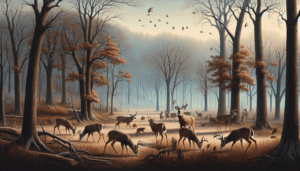
Create a realistic image of wildlife in Iowa during deer hunting season. The scene should carry a late autumn atmosphere, with bare trees, fallen leaves and a hint of frost on the ground. In the scene, feature a group of elegant deer grazing peacefully in this forested landscape. There should be a diverse collection of deer, including bucks with magnificent antlers, elegant does, and young fawns. Enhance the composition with glimpses of other wildlife indigenous to Iowa, such as birds perched on tree branches or squirrels scampering in the distance. Ensure there are no human figures, text, brand names or logos in the scene.

Why Do Fawns Have Spots?

Fawns have white spots for one main reason: camouflage. A newborn fawn cannot outrun a coyote or a bobcat, so its survival depends on not being seen at all. The pattern of white spots scattered across a reddish-brown coat mimics

Read More »
Elk

How Big Is an Elk?

An adult elk typically stands around 4.5 to 5 feet tall at the shoulder and measures 6.5 to 8.5 feet from nose to tail. Mature bulls usually weigh around 700 to 1,100 pounds, while cows are smaller at roughly 500

Read More »