North Woods vs Farmland Deer Hunting
Updated on September 7, 2026. Season dates, tag quotas, and baiting rules move by state. Confirm them on the linked DNR pages before you buy a tag or book a cabin. Pick the habitat before you pick a tree. If
Updated on September 7, 2026. Coues deer are a tiny desert subspecies of white-tailed deer. Mule deer are a different, larger western species. In Arizona and New Mexico they share the same mountains, and the tag in your pocket often
Public land vs a deer lease: cost per sit, pressure, Texas APH vs Iowa tags, and Pike County math from a hunter who does both.
Updated on September 7, 2026 Ottawa National Forest Chequamegon National Forest Size ~1 million acres of USFS land in Michigan’s western Upper Peninsula (Ottawa NF). Chequamegon side ~858,400 acres in northern Wisconsin; managed with Nicolet as one forest over 1.5
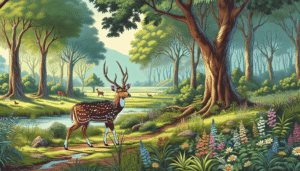
Updated on September 7, 2026. Sika deer and axis deer are the two spotted Asian deer Americans actually meet in the field, and they are not the same animal. A Maryland sika (Cervus nippon yakushimae) is a compact marsh specialist
The fastest way to tell a fallow deer from a white-tailed deer is the rack, then the rump. A mature fallow buck carries broad, shovel-shaped (palmate) antlers unlike any native North American deer except moose. Adult fallow also keep a
Yes. American arborvitae is winter deer candy. Rutgers rates Thuja occidentalis Frequently Severely Damaged (D). Western types and Green Giant are a step less, not a fence.
Updated on September 7, 2026. Ratings below are university lists, not a guarantee for your street. Confirm the linked extension pages before you order bare-root trees. Yes. Deer eat fruit trees — but they do not treat every species the
Updated on September 7, 2026. Ratings below are university browse lists, not a six-pack tag. Confirm local herd pressure before you fill a shade bed with Beacon impatiens and call it deer-proof. Yes. Deer eat impatiens. They are not “deer
Updated on September 7, 2026. Ratings below are university lists, not a guarantee for your street. Confirm current lists on the linked extension pages before you replant a whole hedge. Yes. Deer eat Knock Out roses — buds, blooms, new
Updated on September 7, 2026. Blacktail deer White-tailed deer Size Columbian blacktail bucks commonly 100–200 lb live; Sitka often 100–150. NDA: adult bucks average up to about 140 lb. Compact, built for brush. Typical adults about 90–300 lb. Northern farm
Yes — moose are excellent swimmers. Despite weighing as much as a horse, a moose can swim at around 6 miles per hour, keep swimming for miles at a stretch, and even dive well below the surface to feed on
A newborn white-tailed deer fawn typically weighs between 4 and 8 pounds (about 2 to 3.5 kilograms), with most healthy singles landing around 6 to 8 pounds and twins usually a bit lighter, often 4 to 6 pounds each. For
Updated on September 7, 2026. Sika deer are smaller, darker, and louder than white-tailed deer, and they are not close relatives. The sika (Cervus nippon) is an Asian elk-cousin that keeps faint spots into adulthood, flares a white heart-shaped rump
Updated on September 7, 2026. Ratings below are university browse lists, not a six-pack tag. No salvia is deer-proof when a suburban herd is out of food. Usually no. Deer skip most garden salvias. The genus is in the mint
Deer have white tails primarily for communication. When a white-tailed deer senses danger, it snaps its tail upright and fans the long white hairs on the underside and rump, creating a bright flash called “flagging” that is visible even in
Updated on September 7, 2026 Yes. Evergreen azaleas are deer candy in winter. Rutgers rates evergreen azaleas Frequently Severely Damaged (D) — the same bucket as hostas. Cornell’s woody list splits the genus: evergreen azaleas and pinxterbloom sit with yew
Moose shed their antlers once a year, mostly between late November and January, with mature bulls dropping their racks earliest and young bulls sometimes carrying theirs into February or March. The shed is triggered by falling testosterone after the autumn
Updated on September 7, 2026. Adult axis deer (chital) keep white spots. Adult white-tailed deer do not. That is the ID. The hunt split is legal and calendar: Texas treats axis as an exotic with no closed season on private
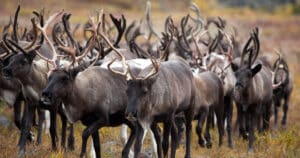
An adult caribou typically stands about 3 to 5 feet (roughly 0.9 to 1.5 meters) tall at the shoulder and measures 5 to 7 feet long. Mature bulls generally weigh somewhere between 250 and 400 pounds (about 110 to 180
Updated on September 7, 2026. Ratings below are university browse lists, not a nursery tag that says “deer-resistant sedum.” Confirm the current lists on the linked extension pages before you fill a dry slope with Autumn Joy and call the
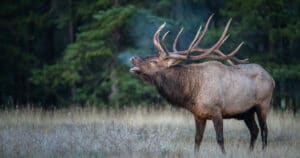
Today, most of North America’s elk live in the western United States and Canada, from the Rocky Mountains and Pacific Northwest down through the high country of Arizona and New Mexico. Smaller reintroduced herds now thrive in eastern states including
Fawns can stand on their own within about 20 to 30 minutes of being born, and most can walk, unsteadily, within a few hours. By the end of their first day, a healthy fawn can follow its mother short distances
Deer snort, or “blow,” mainly as an alarm signal. When a deer detects something suspicious, it forcefully expels air through its nostrils, producing a loud, sharp whoosh that can carry a long way through the woods. The blow serves several