

Deer are the only animals to possess antlers – members of the family Cervidae are the only mammals that grow them, and all species of deer have antlers in one form or another. An extension of the deer’s skull, each antler is a single, miraculous structure of bone, cartilage, skin, nerves, blood vessels, and fibrous tissue. Unlike horns, which are permanent structures, antlers are lost each year and regrown afresh. Although in Bovids both sexes can have horns, in deer only the males possess antlers. The only exception is the Reindeer, where females also have antlers because they are useful for shoveling snow away from the ground so the Reindeer can feed.
What is the Purpose of Deer Antlers?
Antlers are used by male deer to compete with each other. They serve as weapons, symbols of sexual prowess, and – in the Reindeer’s case – tools to dig in the snow for food.
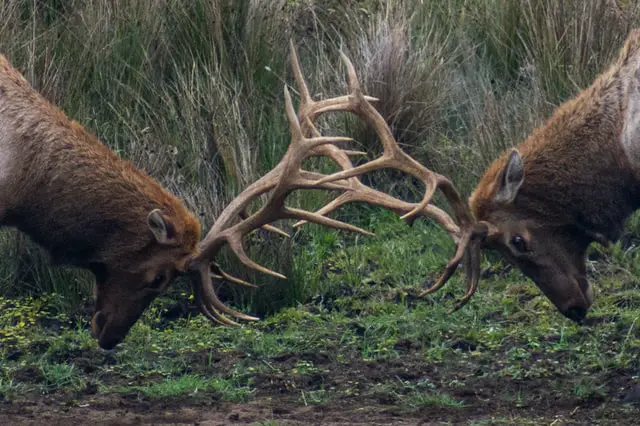
The males use antlers during the rutting period when they try to mate with females. Competition can take various forms: males may use the antlers as weapons, locking them together to engage in a pushing contest as seen in the Red Deer, and they may also be used to stab an opponent. According to biologists, this behavior and use of antlers evolved as a way to compete for females.
With Antlers, Size Matters
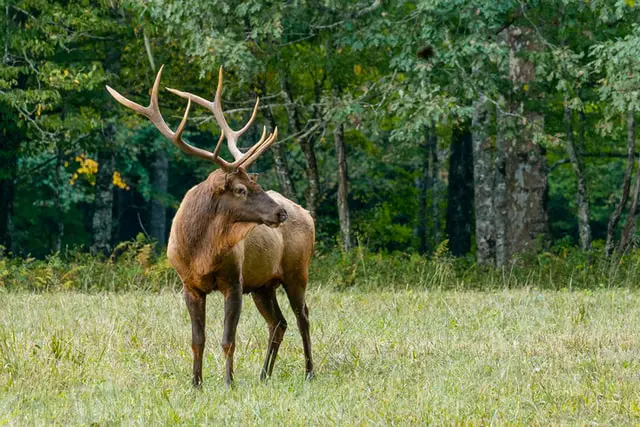
Antlers may not always be used to fight with. Often the strongest males who have had the best food resources grow the biggest and strongest rack.
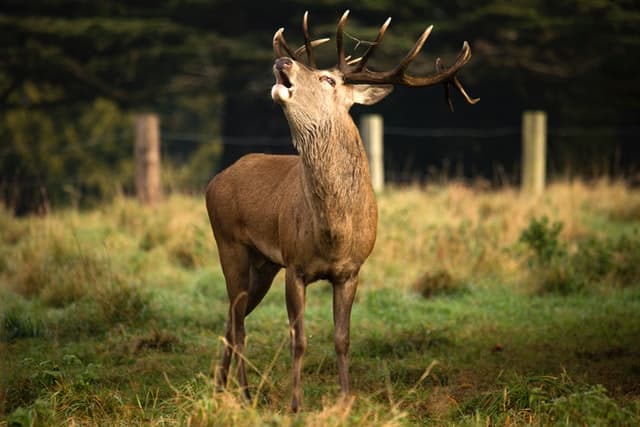
An opponent seeing a male with a full head of antlers may think twice about engaging in a fight – why fight if you can tell instantly you are not strong enough? There is also the possibility that females in some species prefer males with the biggest antlers. Such female choice would lead to selection for larger and larger antlers in male deer, since the size and quality of a rack signals fitness and genetic quality.
How Antlers Affect Deer Social Structure
Antlers have a profound impact on the social structure of deer populations. The size and quality of antlers often determine the hierarchy within a group, with larger-antlered males occupying higher positions, enjoying greater access to resources such as food and mating opportunities, and being more likely to sire offspring.
Dominant males assert their status through sparring matches, while other males exhibit submissive behaviors – avoiding confrontations or engaging in non-aggressive posturing. Dominant males may even offer their antlers to young males for sparring practice, further reinforcing their status. The sound of antlers rattling during sparring is an important communication tool, attracting other males to the area and signaling the presence of competition. The intensity of sparring varies by species and the specific social dynamics of the population.
How Do Deer Antlers Grow?
On the top of the skull there is a bone core known as the ‘rose stock’, and it is from here that the antlers grow. There are two of these bone cores, with an antler growing from each one.
Antlers start as cartilage and gradually calcify into bone, making them the fastest-growing bone tissue in the world. This rapid growth is triggered by increasing daylight and testosterone production. An adult white-tailed deer can grow up to a quarter of an inch of antler per day, while a moose can add as much as a pound of antler per day.
The antlers are lost each year, normally after the rut has taken place – this is known as casting – and they normally begin to regrow straight away.
Antler Velvet
As the antlers grow they are completely covered with a layer of skin known as the velvet. It is soft and hairy, with a very good blood supply that feeds the growing antlers with oxygen and nutrients.
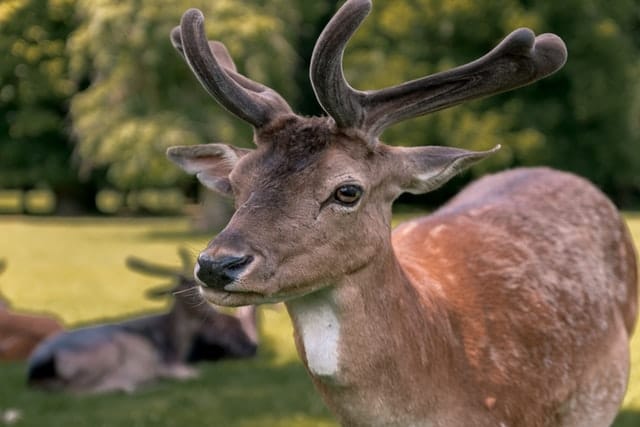
The velvet acts to protect the growing antlers as well as to feed them. Its hair-like fibers, produced by specialized follicle cells, shield the delicate antler tissue, aid the absorption of nutrients from the bloodstream, and allow the release of waste products – keeping the antlers healthy as they develop. Without the velvet covering, antler growth would be compromised, leading to weaker and smaller antlers, and injuries to the velvet can affect how the antler forms.
When the antlers reach their full size, the velvet begins to die away. It dries up, becomes flaky and itchy, and the antlers’ blood supply is lost. Deer rub the velvet off against branches or tree trunks until it has all fallen off – a process called velvet shedding – which also helps strengthen and harden the finished antlers.
Antlers have a top layer with small channels and small button-like raised knobbles known as Perling. The base of the antlers, where the different branches join together into one single shaft, is known as the ‘rose’. In animals growing their first antlers the rose does not occur.
Nutrition Deer Need to Grow Antlers
To grow a new rack, a deer needs a lot of calcium. The size the antlers grow to depends on the mineral resources available in the area where the deer lives, along with the quality of its habitat.
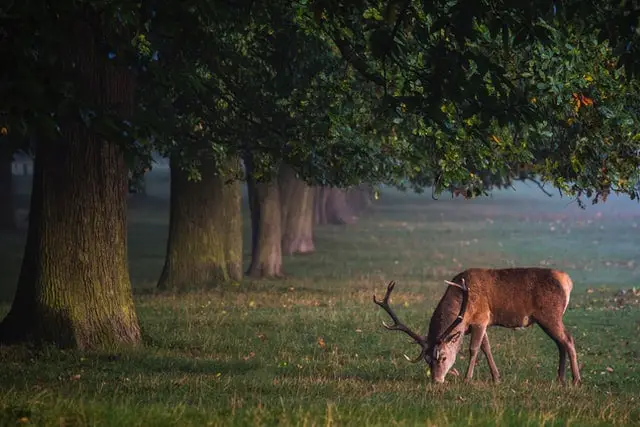
Deer use calcium stored up in their bones throughout the year, which allows the antlers to be grown very quickly. Normally the antlers get larger and gain more tines as the deer gets older, but at a certain age antlers reach a maximum size, after which they become smaller each year.
The Role of Genetics in Antler Development
While environmental factors such as nutrition and habitat quality are essential for optimal growth, the genetic makeup of an individual deer largely determines its antler size potential, and different species have very different genetic predispositions. Moose can grow antlers spanning up to six feet and weighing around 40 pounds each, while white-tailed deer carry much smaller racks. These variations reflect each species’ evolutionary adaptations and its specific needs for survival, dominance, and reproduction. Understanding the genetic factors behind antler development also gives wildlife managers insight into the overall health and fitness of deer populations.
Shedding Antlers
The antlers are lost each year, typically in late winter or early spring. They are shed when a small cavity forms beneath the rose and the antlers break off. The newly exposed bone of the rose stock is quickly grown over from the sides, and the whole growth cycle begins again. You can read more about why, when, and how deer shed their antlers in our dedicated guide.
The Evolution of Antlers in Deer
It is easy to see how antler evolution took place, as there are a variety of different antler shapes and sizes, with different levels of complexity, among living deer species.
The simplest type of antler is the simple spike, seen in the Brocket deer, where the antlers are only short, single sharp shafts growing to just 15 cm. The next evolutionary step was forking antlers – simple forks can be seen in the Andean Deer, which have short antlers with a single fork along their length and 4 tines or ends.
The next step was two forks in the antlers, with the rear fork dividing again, giving deer 6 ends to their antlers – as seen in species such as the Roe Deer and Axis. Further forking led to antlers with numerous ends, as on the Barasingha, which can have up to 20 tines. Some deer grow broad palmate-shaped antlers, such as the Moose and the Fallow Deer.
The Difference Between Antlers and Horns
You probably understand that when you compare horns vs antlers there are differences, but how exactly do antlers and horns differ? Horns are permanent bones covered with keratin, while antlers are branched bones that are shed and regrown each year.
This table explains the differences between antlers and horns:
| Antlers | Horns | |
| Time Kept | Cast each year and grown anew | Remain throughout life without being lost |
| Form | Mostly branched | Unbranched |
| Number of ends or tines | Deer up to 26. e.g.Roe 6 (up to 8). | Always 2 |
| Substance made of | Bone, which is initially covered in velvet. | Horn |
The Growth of Antlers in Roe Deer (by age)
- Button spikes – In the autumn of the first year of the male Roe’s life 2 button like unbranched spike antlers grow from the skull. These are cast in the autumn.
- Spikes – In the spring of the following year, normally in February or March, two branch are grown, occasionally these have 2 ends or tines. These are cast in October.
- Forks – In the February or March of the 3rd year 2 forked branch form from the Rose. These are cast in October.
- 6 tines – In the February or March of the 4th year ( sometimes earlier), 2 additional tines are formed from each branch, meaning the roe now has 6 tines on its antlers. These antlers are cast in October.
Antlers in Human Culture
Antlers have played a significant role in human culture throughout history. In many ancient civilizations they were regarded as symbols of strength, fertility, and spiritual power, and were incorporated into sacred objects, ceremonial attire, jewelry, artwork, and religious rituals. In Norse mythology the god Odin was associated with deer and their antlers, and antlered headdresses and artifacts have been found in ancient burial sites, suggesting their importance in beliefs surrounding the afterlife. Indigenous cultures also fashioned antlers into tools, weapons, and utensils, recognizing their durability and versatility.
In modern times, antlers continue to find uses ranging from medicine to decor. They contain a rich source of bioactive compounds – growth factors, proteins, and minerals – studied for their potential in tissue regeneration and wound healing. Antler extracts are used in traditional medicine practices in some cultures to treat ailments such as arthritis, osteoporosis, and inflammation, and research is ongoing into regenerative therapies and biomedical implants. Antlers are also prized for their aesthetic appeal, appearing in furniture, lighting fixtures, home decor, and crafts, where their intricate shapes and natural textures add a touch of rustic elegance.
Conservation and Antler Management
Hunting plays a significant role in the management of deer populations, but it must be carefully regulated: uncontrolled hunting can lead to overharvesting, disrupting ecological balance and genetic diversity. Conservation efforts focus on sustainable hunting practices – established seasons, bag limits, and enforced regulations – which keep populations healthy while allowing recreational hunting and population control. Hunting also provides economic benefits through license fees and equipment taxes that support local communities and conservation initiatives.
Shed antler collection is a popular activity, and it too should be carried out sustainably. Collectors should respect wildlife habitats and sensitive areas, stay on designated roads and paths to avoid disturbing wildlife and damaging vegetation, and give animals their space during the collecting process. Shed collection should also be conducted during the appropriate seasons and with any necessary permits, as regulations vary between states and different designations of federal land.
Frequently Asked Questions About Deer Antlers
How Can You Tell a Deer’s Age by Its Antlers?
Antler size provides some clues about a deer’s age, but it is not a reliable method for determining exact age. Antlers tend to reach their maximum size and complexity between 4 to 6 years of age for white-tailed deer, and between 9 to 12 years for elk.
What Happens If a Deer’s Antlers Are Damaged During Growth?
Antlers are composed of growing bone, so injuries to the velvet or the underlying structure during growth can result in abnormalities or deformities in the antler’s shape and size.
Is There a Best Time of Year to Find Shed Antlers?
The best time to find shed antlers is late winter and early spring, after deer have cast their antlers. The exact timing varies between regions.
Can Antler Size Be Used to Determine the Health of a Deer?
Antler size offers some insight into health and nutrition – larger, more robust antlers typically indicate good health and optimal nutrition – but antler size alone should not be used as the sole determinant of a deer’s overall condition.


