
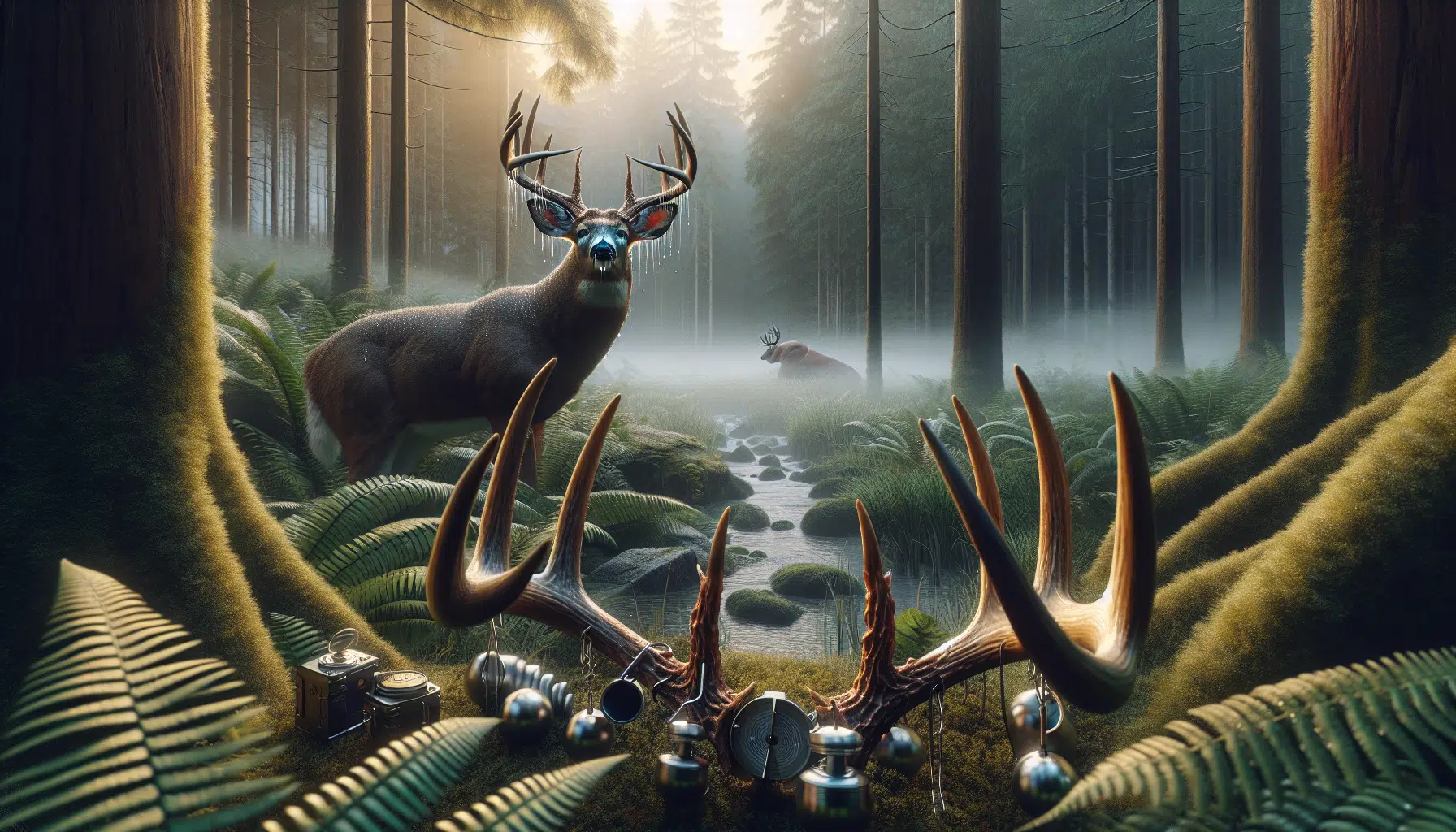
Moose shed their antlers once a year, mostly between late November and January, with mature bulls dropping their racks earliest and young bulls sometimes carrying theirs into February or March. The shed is triggered by falling testosterone after the autumn rut, and within a few weeks of dropping the old rack, a bull’s body is already preparing to grow a new — usually larger — set for the following year.
Here’s a closer look at the annual antler calendar, why the timing varies from bull to bull, and what happens to all those shed antlers lying on the forest floor.
The Annual Moose Antler Cycle
Like all deer, moose grow and discard their antlers every single year — antlers are bone, not horn, and no deer keeps them permanently. A bull moose’s year looks roughly like this:
- Spring (roughly April–May) — new antlers begin growing from the pedicles on the skull, covered in blood-rich skin called velvet
- Summer (June–August) — the period of explosive growth, when a big bull’s antlers can add up to around an inch of length per day at their peak
- Late summer (late August–early September) — growth stops, the bone hardens, and bulls thrash shrubs and small trees to strip away the drying velvet
- Autumn (late September–October) — the rut, when hard antlers are displayed, clashed, and used to establish dominance over rival bulls
- Early winter (late November–January) — testosterone falls, the connection at the antler base weakens, and the antlers drop off, usually days or weeks apart rather than both at once
- Late winter (February–March) — stragglers, mostly young bulls, finally shed, and the cycle begins again in spring
Why Moose Shed Their Antlers at All
Antlers exist for the rut. Their job is to win breeding opportunities — through intimidation displays and, when displays fail, through shoving matches with rival bulls. Once breeding season ends, a rack of heavy bone becomes a pure liability in winter.
Carrying tens of pounds of dead weight on the skull costs energy at exactly the time of year when food is scarcest and every calorie matters. By dropping the rack in early winter, a bull saves energy through the hardest months, then rebuilds a fresh — and typically bigger — set from spring’s abundance. This annual grow-and-drop strategy is shared across the deer family; we cover the underlying biology in more depth in our guide to why deer shed their antlers.
What Triggers the Shed
The proximate trigger is hormonal. Through the rut, high testosterone keeps the antler locked solidly to the pedicle. After breeding ends, testosterone levels fall, and specialized cells called osteoclasts begin dissolving the bone at the junction between antler and pedicle. Within weeks the connection becomes so weak that the antler simply falls away — sometimes knocked loose by a branch, sometimes dropping as the bull shakes his head.
Shedding is generally painless. The exposed pedicle may bleed briefly, then scabs over and heals, and the two antlers often drop days or even a couple of weeks apart — which is why a bull is occasionally seen walking around lopsided, with one antler on and one gone.
Why Timing Varies From Bull to Bull
Not every moose sheds on the same schedule, and the differences follow consistent patterns:
- Age — big mature bulls, which rut hardest and experience the sharpest hormonal swing, typically shed first, often by late December. Young bulls with small antlers may hold theirs well into late winter
- Condition — a bull that finishes the rut depleted, after weeks of barely eating, tends to shed earlier than one in strong condition
- Region and climate — timing shifts somewhat across the moose’s huge range, with local conditions and winter severity influencing the average drop date
Because antler growth is fueled by nutrition and driven by hormones, each new rack generally comes back larger than the last until a bull reaches his prime — roughly ages five to ten — after which antler size plateaus and eventually declines in old age. Only bulls take part in any of this: as we explain in do male and female moose have antlers, cow moose never grow antlers at all.
What Happens to Shed Moose Antlers
A big bull may drop 30 or more pounds of bone into the snow each winter — and the forest wastes none of it.
Shed antlers are rich in calcium, phosphorus, and other minerals, and rodents, squirrels, porcupines, and even foxes and members of the deer family itself gnaw on them. Over a few years, a shed antler may be chewed down to almost nothing.
People collect them too. “Shed hunting” — searching late-winter and spring range for dropped antlers — has become popular across moose country. If you go, check your local regulations first: some states and provinces restrict shed collection dates or close wintering areas to protect animals when they are most vulnerable, and it’s illegal to remove naturally shed antlers from some parks and reserves.
Frequently Asked Questions
Do moose lose both antlers at the same time?
Usually not. The two antlers loosen on their own schedules and typically drop separately — anywhere from hours to a couple of weeks apart. That’s why matched pairs of shed antlers are prized finds: the two sides often land in different places.
Does it hurt a moose to shed its antlers?
No — by the time an antler drops, the bone connecting it to the skull has already been reabsorbed, and hard antler itself has no nerve supply. There may be brief minor bleeding at the pedicle, which heals quickly. The velvet stage in summer is the sensitive period, when growing antlers are living tissue full of blood vessels and nerves.
Do moose have antlers in winter?
Early winter, often yes; late winter, mostly no. A mature bull typically still carries his rack in November and into December, but by January or February most big bulls are bald. If you see an antlered moose in March, it’s most likely a young bull that held its small rack late. Cows never have antlers in any season — a useful identification point, though bulls without antlers can be told from cows by the pale face and lack of the cow’s white vulva patch. And in any season, antlered or not, keep your distance: our guide to moose sounds covers the warning grunts that signal an annoyed animal.
Related Reading
Learn more in our guides to which moose have antlers, why deer shed their antlers, and how antlers work across the deer family — or see how much a bull carries around in how much does a moose weigh.


