
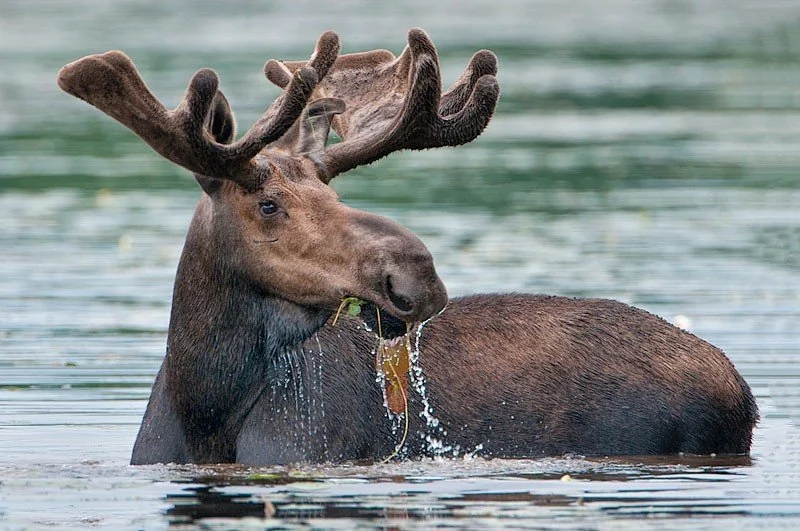
Elk can run at speeds of up to around 40 to 45 miles per hour in short bursts, making them among the fastest large animals in North America. Just as impressive is their endurance: elk can hold a ground-eating trot for miles, jump obstacles around 8 feet high, and swim strongly across rivers and lakes. For an animal that can weigh over 700 pounds, that combination of speed, stamina, and agility is remarkable.
Anyone who has watched a spooked elk herd pour across a mountainside understands that these are not lumbering animals. Let’s look at how fast elk really move, how they do it, and how they compare to deer, moose, horses, and the predators that chase them.
Elk Speed: Sprint vs. Cruise
Like most prey animals, elk have two gears that matter. The sprint, up to around 40 to 45 mph, is for emergencies: a mountain lion’s ambush, a wolf pack’s rush, a sudden human surprise at close range. Elk can only hold that pace briefly.
Their real superpower is the second gear: a fast, efficient trot in the range of 20 to 25 mph that they can sustain over long distances and uphill grades that would break most animals. Wolves are endurance hunters, so elk evolved endurance to match. A healthy adult elk in open country can simply trot away from trouble for miles, which is why wolf packs concentrate on calves and on animals weakened by age, injury, or winter.
Elk are built for exactly this: long legs, a deep chest housing big lungs and heart, and the light, springy build of a distance athlete, all points we cover in how big is an elk.
How Elk Compare to Other Animals
| Animal | Approximate Top Speed |
|---|---|
| Pronghorn | Around 55–60 mph |
| Elk | Around 40–45 mph |
| White-tailed deer | Around 30–35 mph |
| Moose | Around 35 mph |
| Horse (gallop) | Around 25–30 mph; racehorses over 40 |
| Wolf | Around 35–40 mph in sprints |
| Human sprinter | Around 23 mph |
A few takeaways from that table. First, an elk can outsprint an average horse and hang with a good one. Second, elk are faster than the wolves that hunt them over any real distance, which is why pack tactics, relay chases, and target selection matter so much to wolves. And third, nothing on the continent touches the pronghorn, the continent’s true speed outlier.
Against their own family, elk hold the practical speed crown among large deer. Whitetails are quicker off the mark in thick cover, all bounce and dodge, but top out lower, as our guide to how fast deer run shows. Moose are deceptively fast in a straight line but lack the elk’s sustained trotting endurance.
More Than Speed: Jumping and Swimming
Jumping
Elk clear obstacles that stop cattle cold. A standing elk can hop a typical 4-to-5-foot fence almost casually, and motivated elk have cleared barriers around 8 feet high. This is why wildlife-friendly fencing standards exist in elk country, and why “elk-proof” enclosures around haystacks and orchards have to be built seriously tall. Their leaping ability rivals the deer family’s other athletes, which we cover in how high can a deer jump.
Swimming
Elk are strong, willing swimmers. Herds routinely cross rivers on migration, cows lead calves across reservoirs, and elk have been documented swimming considerable distances across lakes and tidal water. Hollow guard hairs give them useful buoyancy, and they swim with the same endurance that defines their running.
When and Why Elk Run
Elk don’t sprint for fun; running is expensive, and wild animals budget energy carefully. The main triggers:
- Predators – wolves, mountain lions, and bears. An elk’s first choice is usually distance: trot away early rather than sprint late.
- Humans – hunted elk treat people as predators and may run a mile or more after a bad scare, while park elk habituated to visitors barely lift their heads.
- The rut – bulls chase rivals and herd cows at speed through September, and a bull charging a competitor is one of the fastest things you’ll see in the mountains. See when is the elk rut for the full spectacle.
- Migration – not running exactly, but herds cover serious mileage between summer and winter ranges, mostly at a walk and trot.
Calves can stand within an hour of birth and outrun a human within days, an evolutionary necessity when bears actively hunt newborns each June.
Terrain shapes all of this. In open sagebrush or meadow, elk stretch out into that long trot and simply leave threats behind. In heavy timber, they switch tactics, using deadfall and slope to break a pursuer’s line, and it’s striking how quietly a several-hundred-pound animal can vanish uphill through blowdown that a person can barely climb through at a walk.
Why Elk Speed Matters to People
Elk speed has two practical consequences for humans. The first is on the road: an animal that can cross a highway at 40 mph gives drivers almost no reaction time, and an elk’s mass makes collisions far more dangerous than deer strikes. In elk country, take dawn and dusk speed-limit signs seriously, especially in fall and during spring migration.
The second is on foot: you cannot outrun an elk, and neither can your dog. The safe response to a too-close elk is distance and barriers, never speed, a topic that deserves its own discussion of elk behavior around the species generally.
Frequently Asked Questions
Can an elk outrun a horse?
Over rough mountain terrain, almost always. An elk’s top speed of around 40 to 45 mph beats a typical horse’s gallop, and elk handle slopes, deadfall, and thin air far better. On a flat track, an elite racehorse would edge out an elk, but that’s not a race nature ever runs.
Are elk faster than deer?
At top speed, yes. Elk reach around 40 to 45 mph, while white-tailed deer typically top out around 30 to 35 mph. Whitetails are more explosive over the first few bounds in thick cover, but in open country an elk both outsprints and dramatically out-endures any deer.
How fast can a baby elk run?
Astonishingly fast, astonishingly soon. Calves stand within their first hour and can outpace a human within about a week, and by a few weeks old they can keep up with the herd at a trot. Speed comes early because bears and mountain lions target calves heavily in their first month.
Related Reading
Compare the family’s athletes in how fast can deer run and how high can a deer jump, size up the machinery in how big is an elk, or start from the top with our full elk profile.


