
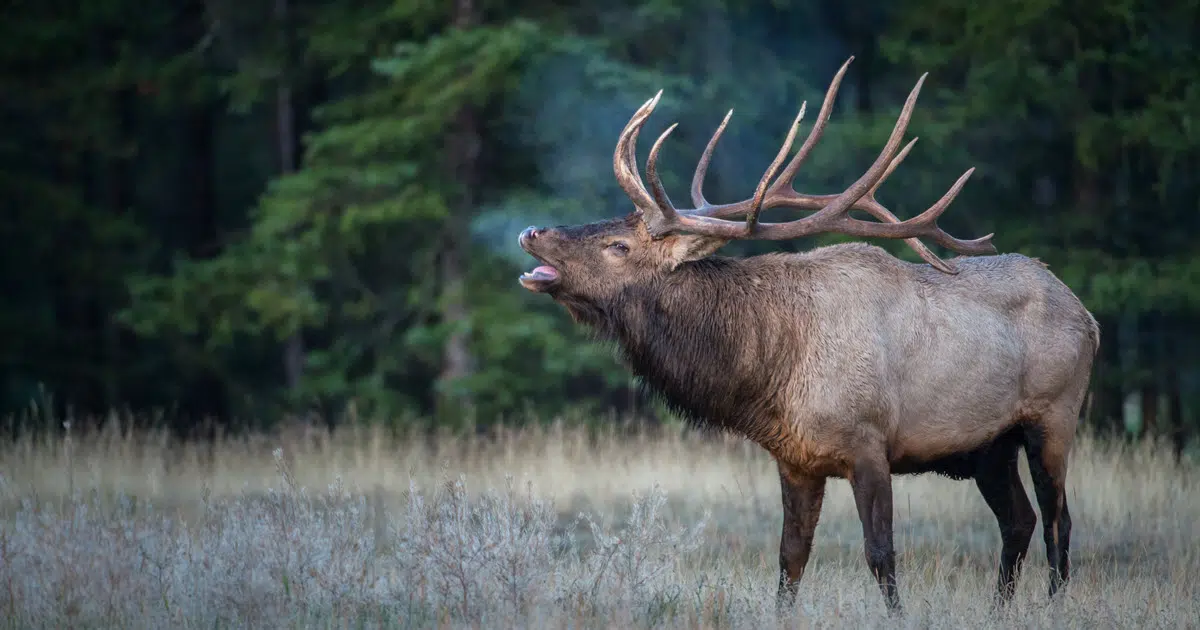
The elk rut, the annual breeding season, runs from roughly mid-September through mid-October across most of North America, with peak activity typically in the last two weeks of September. That’s when bulls bugle most intensely, gather harems of cows, and fight rivals. Timing shifts only modestly with latitude and elevation, because the rut is cued primarily by shortening day length, and calves need to be born on schedule the following spring.
If you only ever make one wildlife-watching trip in North America, a late-September morning in elk country is a strong candidate. The rut turns quiet mountain meadows into an amphitheater of screaming bulls, clashing antlers, and herds in constant motion. Here’s when it happens, why, what you’ll see, and how to watch it safely.
Why September? The Biology of Rut Timing
The rut is scheduled backward from spring. Elk gestation lasts around 8.5 months, and calves have the best survival odds when they’re born in late May and early June, landing on fresh green forage with a full summer to grow before winter. Breed in late September, calve in early June: the math sets the calendar.
The trigger itself is photoperiod, the shortening days of late summer, which drives hormonal changes in both sexes. Bulls’ testosterone surges in August and September, hardening their antlers and transforming placid summer bachelors into restless, aggressive rivals. Cows come into estrus for short windows during the rut, and a cow that isn’t bred in her first cycle will cycle again a few weeks later, which is why some rut activity lingers into late October. The same day-length logic drives breeding season across the deer family, as we cover in when is deer mating season.
The Sound of the Rut: Bugling
Nothing else in North American nature sounds like a bugling bull elk: a deep, resonant bellow that climbs into an eerie, flute-like scream and often finishes with a series of grunts. Bugles advertise a bull’s size and condition to cows, warn off lesser rivals, and challenge equals. On calm September mornings and evenings, bugles can carry a mile or more, and in good elk country you may hear several bulls answering each other across a valley.
Bulls bugle most in the cool hours around dawn and dusk, and they’ll often respond to each other in escalating exchanges. If you want to know exactly what you’re listening for before your trip, our elk bugle sound guide lets you hear it.
What Bulls Do During the Rut
A mature herd bull’s September is a full-time job:
- Gathering a harem – a dominant bull collects and defends a group of cows, often a dozen or more, constantly circling to keep them together.
- Bugling and displays – most conflicts are settled by sound and posture. Bulls size each other up by bugling, parallel-walking, and thrashing shrubs with their antlers.
- Wallowing – bulls dig muddy pits, urinate in them, and roll, coating themselves in scent that advertises their status to cows and rivals.
- Fighting – when two evenly matched bulls won’t back down, they lock antlers and shove in violent, sod-tearing battles. Serious injuries are uncommon but real, and the loser is driven off.
- Barely eating – herd bulls feed so little during the rut that they can lose a substantial share of their body weight by mid-October, a deficit that shapes their odds of surviving winter.
Meanwhile, younger “satellite” bulls lurk on the edges of harems, hoping to steal a cow while the herd bull is distracted. Watching that chess game play out is half the fun of a rut-viewing trip.
Where and When to Watch the Rut
Some of the most reliable and accessible rut-viewing destinations include:
- Rocky Mountain National Park, Colorado – the meadows around Estes Park fill with bugling bulls every September.
- Yellowstone National Park, Wyoming – the Mammoth Hot Springs area is famous for rutting bulls moving right through the developed district.
- Cataloochee Valley, Great Smoky Mountains – the East’s marquee rut show, courtesy of reintroduced herds.
- Benezette, Pennsylvania – the heart of Pennsylvania’s elk range, with a dedicated visitor center and viewing areas.
- Jasper and Banff, Alberta – roadside rut activity in the Canadian Rockies.
Aim for the last week of September, be in position at first light or the final two hours before dark, and bring binoculars. Overcast, cool days often extend activity later into the morning. For more on the landscapes elk use through the seasons, see where elk live.
Rut Viewing Safety: Give Bulls Room
A rutting bull is several hundred pounds of hormones and irritation, and every fall, park visitors are charged, and occasionally injured, for getting too close. The National Park Service requires staying at least 25 yards from elk, and during the rut more distance is smarter. Treat these rules as a floor, not a target:
- Stay near your vehicle in roadside viewing areas, and never position yourself between a bull and his cows.
- Watch for warning signs: a bull staring at you, grinding his teeth, bugling in your direction, or thrashing vegetation means you’re too close.
- Use a telephoto lens instead of your feet. No photo is worth an antler.
- Keep dogs leashed and away; elk perceive them as predators.
After the Rut
By late October the meadows go quiet. Harems dissolve, bulls drift off alone or into small bachelor groups to feed hard before winter, and cows regroup into large winter herds. Bred cows will carry their calves through the winter and give birth in late May or June. The bulls keep their antlers for months yet, finally dropping them in early spring, a cycle we cover in when do elk shed their antlers.
Frequently Asked Questions
What month is the elk rut the strongest?
Late September is the peak almost everywhere elk live. The last two weeks of the month typically bring the most bugling, the biggest harems, and the most fighting, though good activity often runs from mid-September into early October, with a smaller echo a few weeks later as unbred cows cycle again.
What time of day are elk most active during the rut?
Dawn and dusk, by a wide margin. Bugling and herd movement are heaviest in the first and last hours of daylight, and on cool or overcast days activity can stretch further into the morning. Middays are usually quiet, with herds bedded in timber.
Are elk aggressive during the rut?
Bulls are far more aggressive than at any other time of year. Their aggression is aimed mainly at rival bulls, but rutting bulls have charged people, cars, and even tripods that got too close. Keep at least 25 yards away, more if a bull shows any sign of noticing you.
Related Reading
Hear the soundtrack in our elk bugle guide, get the full species picture in the elk profile, learn where elk live to plan a viewing trip, or see the broader cycle in when is deer mating season.


