Animals That Start With G
G is for gentle giants and expert diggers — the largest primate, the tallest animal, and a squad of ground-dwellers that spend half their lives

G is for gentle giants and expert diggers — the largest primate, the tallest animal, and a squad of ground-dwellers that spend half their lives
F is for fliers, gliders, and sprinters — plus a deer that helped decorate castle parks for a thousand years. Here are 16 real animals
E gives the animal alphabet its heavyweights and its featherweight: elephants, elk, and elephant seals share this letter with a shrew lighter than a coin.
D is the letter of the deer family, man’s best friend, and a few creatures stranger than fiction — including a wolf from the Ice
C might be the most crowded letter in the animal alphabet — cats big and small, deer with fangs, the fastest sprinter on Earth, and
B brings the giants and the tinies: the biggest animal that has ever lived shares this letter with a bat lighter than a penny. Here
The animal alphabet starts strong: the letter A gives us armored diggers, spotted deer, snow-white wolves, and a salamander that never grows up. Here are
Every color an animal wears comes from just two toolkits: pigments and structure. Pigments are colored chemicals — melanin makes blacks, browns, and golds, while
Gray is what you get when melanin is spread thin — a mix of dark pigment and pale, unpigmented bands along each hair. Many “gray”
Brown may be the most common coat color on Earth, and there is a simple reason: dirt, bark, and dead leaves are brown. An animal
Pink animals are real, and they get their color in three very different ways. Some, like flamingos and spoonbills, turn pink from carotenoid pigments in
Golden fur and feathers sit right between yellow and brown, and nature makes that color two ways at once. In mammals, a warm form of
Most yellow animals get their color from food. Plants and algae make yellow-orange pigments called carotenoids, and animals that eat them — or eat the
In a world full of leaves, green is the ultimate camouflage — yet most green animals cannot actually make green pigment. Green frogs, lizards, and
Blue is the rarest common color in the animal kingdom, and it hides an amazing secret: almost no animal actually makes blue pigment. A cardinal
Animals are white for very different reasons. Some, like polar bears and snowy owls, evolved pale coloring as camouflage against snow and ice. Others are
Black animals get their color from melanin, the same pigment that darkens human hair and skin. When an animal’s body produces a lot of melanin,

A group of moose is usually just called a herd. But here’s the honest answer behind the trivia question: moose are among the least herd-forming
A female elk is called a cow. A male elk is a bull, and a baby elk is a calf. Elk share this cattle-style naming
A baby caribou is called a calf — the same term used for the young of other large deer like moose and elk, and for
Most deer give birth to one or two fawns per year, and for a healthy adult white-tailed doe, twins are actually the norm. First-time mothers

Wild elk typically live around 10 to 13 years, though cows in lightly hunted or protected herds can reach their late teens and occasionally their
Bats live astonishingly long lives for their size — many species commonly reach 10 to 20 years in the wild, and some individuals have survived
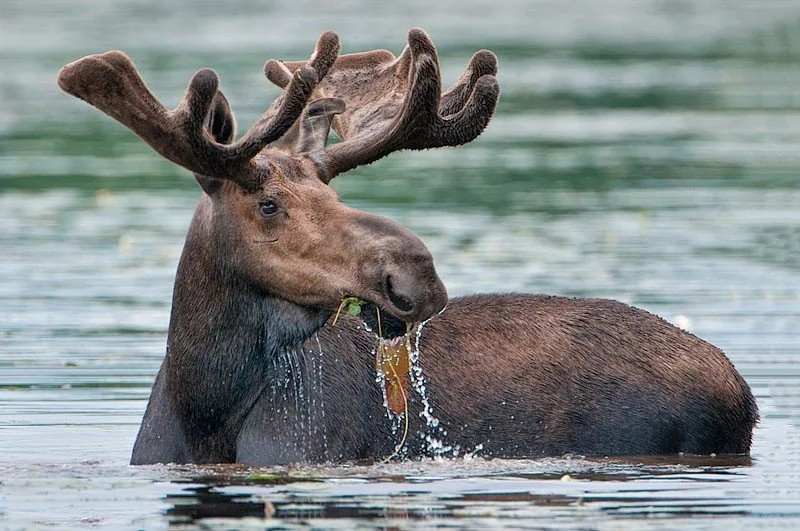
Elk can run at speeds of up to around 40 to 45 miles per hour in short bursts, making them among the fastest large animals