
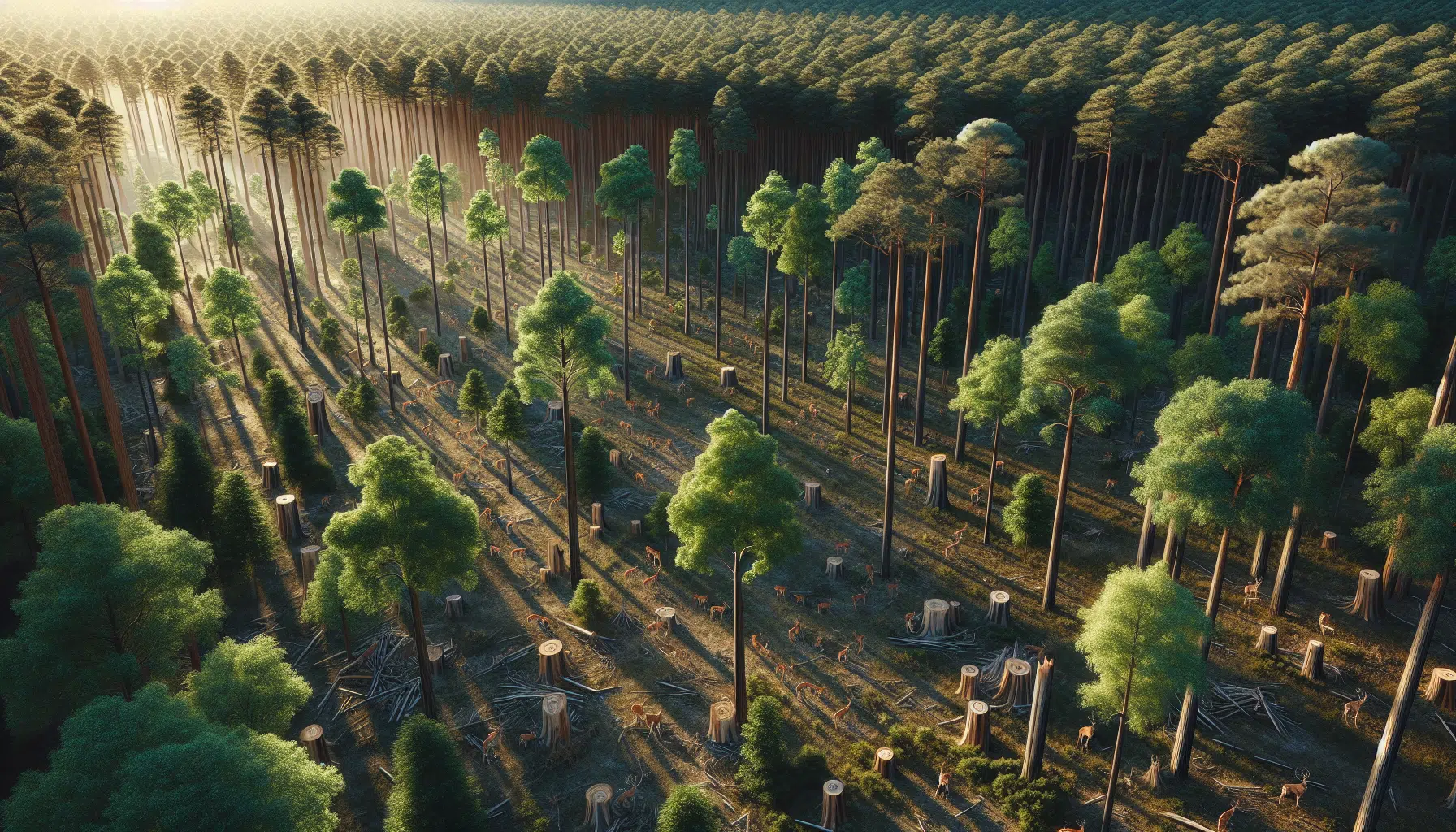
Decide If Timber Company Land Is Worth Your Time
Yes, deer hunting timber company land in the South can be flat-out worth it, because the deer use fresh cuts, edges, and creek bottoms like highways.
The catch is you have to hunt it like changing weather, not like a family farm.
I grew up poor in southern Missouri and learned public land before I could afford any lease, so rotating ground feels normal to me.
Timber company land feels the same way, except the “habitat” can change overnight when a crew shows up with a skidder.
Here is what I do before I ever hang a stand on timber land in the South.
I find out who owns it, what the access rules are, and where the newest cut meets the thickest cover.
Pick Your Access Plan Or You Will Get Burned
The first decision is access, because some timber land is basically public, and some of it is locked down like Fort Knox.
If you guess wrong, you can lose your hunt, your gear, or your truck window.
Here is what I do when I roll into a new chunk of timber company ground.
I pull up the county GIS map, OnX Hunt, and the company’s recreation page, and I screenshot the boundary lines.
I learned the hard way that “everybody hunts there” does not mean it is legal.
Back in 2004 when I was hunting the Missouri Ozarks, I crossed what I thought was a public ridge and found fresh purple paint on a tree line I never saw in the dark.
I backed out and lost my morning, and I was lucky that was the worst of it.
In the South, timber land rules usually fall into three buckets.
Open access, permit access, or lease access.
If it is open access, I still treat it like public land and expect pressure near the easiest roads.
If it is permit access, I pay, print, and carry the permit because wardens love those areas.
If it is lease access, I move on unless the price makes sense, because I am not paying Pike County, Illinois money for a pine plantation that got clearcut last winter.
Choose Which Cut Age To Hunt, Because Deer Pick Favorites
This is the biggest tradeoff on timber company ground.
Fresh cuts have food and sunlight, but they can feel open until the regrowth gets nasty.
Old cuts have cover, but the browse can be lower and the travel routes get tighter.
Here is what I do when I have options.
I hunt the cut that is ugly to walk through, because that is where the daylight movement hides.
In Southern Iowa I learned how much deer love edge cover during the rut, and it carries over to the South on timber land.
I look for a cut that is 2 to 6 years old, with waist to head-high regen, and a hard edge against mature timber.
If the cut is so fresh it looks like a parking lot, I hunt the nearest cover that still has a roof.
If the cut is so old it is turning into pole timber, I treat it like any other thick bedding block and hunt the downwind side.
My buddy swears by sitting right on the middle of a clearcut with a rifle and a bipod.
I have found that for bow hunting, that is a good way to watch deer at 70 yards and never touch a string.
Make A Call On Pines Vs Hardwoods, Because Your Setup Changes
Pine plantations can be awesome or dead, and the difference is usually sunlight on the ground.
If it is a dark pine block with no understory, I do not waste sits there.
If it has thinned rows, briars, blackberry, and grass coming in, I pay attention.
Hardwood bottoms in the South can be money, especially where they meet pine.
Creek crossings, beaver ponds, and narrow drains create forced movement that timber land needs.
Here is what I do on the map.
I mark every transition line where pine meets hardwood, every bend in a creek, and every skinny neck of timber between cuts.
This connects to what I wrote about deer habitat because timber land is basically a patchwork of bedding and feeding if you read it right.
Plan For Pressure, Because Timber Land Attracts Trucks
If a road looks good on a map, it will have tire tracks during season.
That is not a theory, that is just how it is.
Buffalo County, Wisconsin taught me what pressure does to deer, because hill country public pressure makes deer act like ghosts by Halloween.
Timber company land in the South can feel the same, just flatter and thicker.
Here is what I do to beat it.
I park where other guys do not want to park, then I walk 20 more minutes past the first “good looking” sign.
I hang on the downwind side of the thickest stuff near the best food, and I hunt the access routes other hunters create.
I learned the hard way that walking in on the obvious logging road just makes you part of the parade.
Back in November 2019 in Pike County, Illinois, the morning I killed my 156-inch typical, I slipped in on a ditch nobody wanted to cross because it was shin-deep mud.
That same kind of ugly access is what saves you on timber ground.
Don’t Overthink Deer “Intelligence,” But Respect It
Deer are not wizards, but they learn fast when trucks roll and doors slam.
If you want the quick version, this connects to what I wrote about are deer smart because pressured deer change patterns hard.
Here is what I do on timber land after opening weekend.
I stop hunting the easy edges in the evenings and start hunting bedding exits in the mornings.
I also shorten my sits and only hunt the best wind, because stinking up a bedding block on timber land can ruin it for two weeks.
Use Fresh Sign, Not Old Stories, Because Timber Changes Fast
On a farm, last year’s scrape line might still matter.
On timber company ground, last year’s scrape line might be under a brush pile or a new road.
Here is what I do every time I scout.
I look for tracks in the sand on logging roads, fresh rubs on the edge of regen, and droppings that are still shiny.
If I do not find fresh sign, I keep moving, even if the spot looks “deery.”
I check feeding movement too, and when I am trying to time deer movement, I check feeding times first.
It does not replace scouting, but it tells me when I should be sitting still instead of tromping around.
Pick Your Stand Style, Because Comfort Is A Real Tradeoff
Timber land in the South can be loud, thick, and full of straight trees that do not want a climber.
You have to decide if you are going to be mobile, or comfortable, because you rarely get both.
Here is what I do most of the time.
I run a lightweight hang-on with climbing sticks and I hunt like a thief, in and out, no trimming unless I have to.
My best cheap investment is still a set of $35 climbing sticks I have used for 11 seasons.
They are scratched up and loud if I bang them, but they get me 18 feet up fast.
I wasted money on $400 ozone scent control that made zero difference, and I would rather buy good sticks and a quiet pack than another “scent machine.”
If you are hunting thick regen where shots are 18 yards, forget about getting 25 feet high and focus on picking one clean lane and staying still.
If you are hunting a cut edge where you might need a 32-yard shot, get high enough to see, but not so high you skyline yourself.
My Quick Rule of Thumb
If you are hunting a clearcut that is 2 to 6 years old, do set up on the downwind edge where trails dump into the regen.
If you see fresh tracks crossing a logging road in two directions, expect deer to use that crossing at first and last light like a time clock.
If conditions change to steady 12 to 18 mph wind, switch to hunting inside the timber 40 yards off the edge where the swirling calms down.
Decide How You Will Handle Wind In Pine Blocks
Wind is a bigger deal on timber ground than most guys admit.
Pine rows and cut edges make wind do dumb stuff, and a “good wind” can still betray you.
Here is what I do.
I carry a milkweed pod in my pocket and I test wind every 10 minutes when I am near bedding.
If the wind is rolling and dumping, I back out and hunt a more forgiving funnel.
This connects to what I wrote about do deer move in the wind because deer will still move, but your scent cone gets weird.
I would rather hunt a slightly worse spot with a steady wind than the best edge on the property with swirl.
Make A Call On Morning Vs Evening, Because Heat Can Ruin Evenings
In the South, early season evenings can be 84 degrees at sunset and humid enough to soak your shirt.
You have to decide if you are hunting for movement, or hunting for comfort, because you will not sit still if you are miserable.
Here is what I do in hot weather.
I hunt mornings closer to bedding, and I save evenings for cold fronts or shaded creek bottoms.
Back in 2007 I made the worst mistake of my hunting life, gut shot a doe, pushed her too early, and never found her.
That happened because I got impatient and I was hunting like time was running out.
On hot Southern timber land, impatience gets worse, because sweat and bugs make you rush shots and rush tracking.
When the first real front hits and it drops from 78 degrees to 42 degrees, I switch hard to evenings on food edges.
Know What Deer Do In Rain On Timber Land
Rain changes timber land hunts fast, because cuts can flood and roads turn into grease.
Here is the tradeoff.
Light rain can cover your sound and get you deeper, but heavy rain can wash sign and kill visibility.
If you want the quick version, this connects to what I wrote about where do deer go when it rains because they do not vanish, they shift.
Here is what I do during a steady drizzle.
I still-hunt the downwind edge slow, and I watch for deer standing tight in cover.
Here is what I do after a hard rain stops.
I get on the first good crossing or edge and sit, because deer like to get up and move when it breaks.
Pick Your Shot Lanes, Because Regrowth Will Eat Your Arrow
Clearcut regrowth looks open until you shoot through it.
Then your arrow hits one pencil-size twig and you are sick to your stomach.
Here is what I do.
I pick one primary lane and one backup lane, and I do not “hope” a third lane exists.
If I cannot get a clean lane, I move 10 yards instead of trimming a bunch and advertising my stand.
If you need a refresher on lethal angles, this connects to what I wrote about where to shoot a deer to drop it in its tracks because timber land shots are often tight-window shots.
Don’t Cheap Out On A Headlamp, Because Timber Land Tracking Gets Western
South timber cuts have briars, vines, and holes that want to break your ankle.
If you shoot one at last light, you might be tracking in thick mess for 300 yards.
Here is what I do.
I run a Petzl Actik headlamp and I keep spare batteries in the truck.
I used cheap gas station lights for years, and I learned the hard way that dim light makes you miss blood and walk past deer.
The Petzl cost me about $50, and it has taken rain, sweat, and two kids “borrowing” it and dropping it.
Find This and More on Amazon
Decide How You Will Track, Because One Bad Call Can Cost The Deer
I am not proud of it, but I have lost deer I should have found, and I have found deer I thought were gone.
The biggest difference is patience and a plan, not hero tracking.
Here is what I do right after the shot.
I mark the last place I saw the deer, I listen for the crash, and I do not walk a single step for 20 minutes.
If the hit is questionable, I back out and I give it time, even if that means calling in help and coming back at midnight.
I learned the hard way in 2007 that pushing a gut shot deer is how you turn a recoverable deer into a lost deer.
If you want a step-by-step on the mess after recovery, this connects to what I wrote about how to field dress a deer because timber land drags can be brutal and field dressing right matters.
Bring The Right Pack, Because You Will Sweat And Get Cut Up
I used to haul way too much junk because I thought gear solved problems.
I burned money on gear that did not work before I learned what actually matters.
Here is what I do now for South timber land.
I carry water, a small first aid kit, a sharp knife, a haul rope, a headlamp, and one extra layer.
I do not carry three calls, two rattling systems, and a full scent lineup.
If I want a call, I carry a Primos Buck Roar and that is it.
It is about $15, it weighs nothing, and it has held up for me for a couple seasons without cracking.
Find This and More on Amazon
Use The Right Deer Talk, Because Misreading Sign Wastes Sits
Guys argue about sign, but the words matter too, especially when you hunt with kids or new hunters.
If you are new to the basics, start with what I wrote about what a male deer is called and what a female deer is called so you are not mixing up buck sign and doe travel.
Rubs on cut edges mean something different than rubs deep in bedding.
On timber land, I treat edge rubs like travel direction, and bedding rubs like a warning sign that a mature buck lives close.
FAQ
How Do I Find Out If A Timber Company Allows Public Hunting?
I check the county GIS owner layer, then I search the company name plus “recreation permit,” and I call the local office if it is unclear.
I also confirm access points in OnX Hunt because some parcels have landlocked corners that look reachable but are not.
What Cut Age Produces The Most Daylight Deer Movement In The South?
I like 2 to 6 year cuts because they have groceries and enough cover for bucks to move before dark.
Fresh cuts can be great after a cold front, but they burn you in bow range unless deer feel safe.
Should I Hunt The Edge Of A Clearcut Or Back In The Timber?
If pressure is light and the wind is steady, I hunt the edge with a clean shooting lane.
If trucks are everywhere or wind swirls, I go 30 to 60 yards inside the timber and catch deer staging.
How Far Do Deer Usually Run After A Good Shot In Thick Timber?
I have watched them tip over in sight, and I have tracked them 180 yards on a double lung.
If you want context on speed and why they vanish fast, this connects to what I wrote about how fast deer can run.
What Is The Biggest Mistake Guys Make On Timber Company Land?
They hunt it like a permanent farm and ignore how fast logging changes bedding and food.
The second biggest mistake is parking on the best sign and letting every deer know they showed up.
Can I Realistically Drag A Deer Out Of A Clearcut By Myself?
Sometimes yes, but it can be a 45 minute fight for 250 yards if it is thick and tangled.
If you are wondering what you are dealing with, this connects to what I wrote about how much a deer weighs and it will make you plan smarter.
My Last Checklist Before I Burn A Whole Weekend
If I had to say it in one line, timber company land in the South is worth hunting if you stay mobile and hunt what got cut last, not what looked good five years ago.
If you treat it like a fixed farm, you will sit on dead edges and blame the moon.
Here is what I do the night before I hunt a new timber tract.
I pick two setups for two winds, and I pick a third “oh no” spot for when somebody parks on my plan A.
I learned the hard way that having one great spot is the same as having no spots.
Back in 2016 in the Missouri Ozarks, I walked a mile to a cut edge that was ripped up by fresh boot tracks, and I had no backup plan and no daylight movement.
Decide If You Are Hunting Meat Or Antlers, Because That Changes Everything
You have to make this call early, because timber land can spoil you with doe sightings and still be stingy with mature bucks.
If I am taking my kids, I hunt for does and easy encounters, because confidence matters more than score.
If I am hunting for a mature buck, I accept I might sit three days and see two deer.
Here is what I do for meat hunts on timber ground.
I sit the easiest travel from bedding to groceries, and I do not overthink it.
Here is what I do for buck hunts.
I hunt the downwind edge of the nastiest cover near the best browse, and I only go in when the wind is right.
If you are trying to keep your goals straight, it helps to know what you are looking at, and that is why I point new hunters to deer species when they start asking if that was “a different kind” of deer in the cut.
Make A Call On Cameras, Because Theft Is Real On Timber Land
Trail cameras can help on timber company ground, but they can also vanish fast.
You have to decide if the intel is worth the risk and cost.
Here is what I do.
I run one cheap camera low impact for 10 to 14 days, then I move it, because patterns change and people find them.
I learned the hard way that a $199 camera on an obvious road is basically a donation.
My buddy swears by running eight cameras and building a “data set.”
I have found one camera in the right pinch tells me more than eight cameras on roads where every hunter walks.
Decide If You Will Hunt The Same Spot Twice, Because Timber Deer Pattern You Back
This is a tradeoff that gets guys in trouble.
If you sit the same edge three evenings in a row, you might see more deer, but you will educate the best deer first.
Here is what I do.
I hunt a spot once, maybe twice, then I give it a rest unless the rut is on fire.
If I get busted, I do not “try again tomorrow.”
I leave and I come back a week later, or I switch to a different cut or a different transition.
This ties back to what I wrote about deer mating habits because during the rut bucks forgive more, but outside the rut they remember where they smelled you.
Pick A Drag Plan Before You Shoot, Because Clearcuts Lie
A clearcut looks flat until you are dragging a deer through briars and stump holes in the dark.
You have to decide before the shot if you can get that deer out without doing something stupid.
Here is what I do.
I look for the closest skid road or creek bar that will carry a drag, and I mentally mark it like a waypoint.
If I am more than 700 yards from the truck in thick regen, I already know I am quartering it and packing it, or I am calling help.
I process my own deer in my garage, taught by my uncle who was a butcher, so I am fine with breaking one down clean if I have to.
If you want a realistic idea of yield, this connects to what I wrote about how much meat from a deer because dragging “a deer” and dragging 70 pounds of meat are two different problems.
Decide What You Will Do If You Bump A Deer, Because It Happens In Thick Pines
On timber company land, especially pine blocks and regen, you are going to bump deer while scouting or slipping in.
The mistake is panicking and stomping deeper like you can “fix it.”
Here is what I do when I bump a deer within 80 yards of where I want to hunt.
I freeze and listen, and I watch for 60 seconds to see if it blows or just slips off.
If it just slips off, I keep going and set up, because half the time it circles back by dark.
If it blows hard, I back out and hunt a different edge, because that deer will drag others with it.
Back in November 1998 in Iron County Missouri, the day I shot my first deer, an 8-point with a borrowed rifle, I bumped deer walking a ridge too fast and it still worked out.
I got lucky, and I do not count on luck anymore.
Gear I Actually Trust For Southern Timber Ground
I am not a guide and I do not get paid to say this stuff.
I am just a guy who has burned money on gear that did not work before learning what actually matters.
Here is what I do for comfort and safety down there.
I wear rubber boots only if I am crossing wet bottoms, and otherwise I wear light hikers so I do not sweat to death.
I keep a compact pull-up rope and a lineman’s belt every single hang, because falls do not care how tough you are.
I also carry a Thermacell, because some Southern evenings will eat you alive and make you fidget.
I used to tough it out and “be a man,” and I learned the hard way that mosquitoes make you move at the exact wrong second.
The Thermacell MR450 runs about $25, and mine has lasted three seasons with the only issue being I lose the little fuel caps if I am not paying attention.
Find This and More on Amazon
Decide When To Call It And Move, Because Sitting Dead Woods Is A Habit
The easiest trap on timber land is sitting a “pretty” spot that has no fresh life.
You have to decide how long you will give a spot before you move.
Here is what I do.
If I do not see a deer, hear a deer, or find a fresh track crossing within 2 hours of daylight movement time, I move at midday or I move the next sit.
If I am seeing does but no buck sign by November 5th, I slide closer to bedding and hunt travel tight.
If I am seeing only nighttime camera bucks, I stop staring at the camera and I fix access and wind.
This also connects to what I wrote about do deer attack humans because thick timber spots get folks jumpy, and the real danger is still your footing, your blade, and your bad decisions, not a whitetail trying to pick a fight.
Know What “Big” Means Down There, Because Expectations Can Ruin Your Hunt
Some Southern timber tracts grow hammers, and some are 1.5-year-old factories.
You have to decide what you are proud of on that ground.
Pike County, Illinois has made a lot of guys spoiled, and I say that as somebody who pays for a small 65-acre lease there.
On many Southern timber tracts, a clean 120-inch 8-point is a stud, and I would shoot him with zero shame.
If you want to keep your head right, compare yourself to your own past seasons, not Instagram.
FAQ
How Do I Avoid Getting Lost On Big Timber Company Tracts?
I pin the truck, pin my stand, and pin one “bailout” road in OnX before I leave cell service.
I also carry a small compass, because phones die at the dumbest times.
Is It Worth Hunting A Clearcut The Same Day They Are Logging?
No, not while machines are running, because deer usually vacate and the risk is not worth it.
I come back 24 to 72 hours later and hunt the closest thick cover downwind, because deer filter back fast once it quiets.
What Is The Best Way To Hunt Creek Bottoms On Timber Land?
I hunt crossings where the banks pinch tight, and I set up 20 yards off the water so my wind is not dumping straight down the channel.
If you need a reference for why deer love those lanes, it helps to understand deer habitat and how cover and water force movement.
Should I Focus On Does Or Bucks On Southern Timber Land During Early Season?
I focus on does near the best browse, because bucks will often show on the same food edges right before dark.
If I see doe groups filtering out of a 3-year cut, I expect a buck to check that edge once the first cool evening hits.
What Should I Do If I Find A Fresh Rub Line But No Scrapes?
I hunt it anyway, because timber land scrapes can be scarce in thick regen, but rubs still tell me travel and attitude.
If you want to keep buck sign straight, I point people to why do deer have antlers because it explains why rubs pop in certain weeks and then vanish.
How Do I Know If A Deer I Shot Is A Buck Or A Doe In Thick Cover?
I look for antlers first, then I check the head shape and neck, and I do not assume in low light.
If you want the simple language, this connects to what is a male deer called and what is a female deer called so you can talk it through clearly with a buddy during tracking.
How I Think About Southern Timber Company Land After Two Decades Of Hunting
I have sat freezing in Buffalo County, Wisconsin snow, chased mule deer in Colorado, and dealt with Texas feeders and hogs, and I still come back to timber cuts because they create opportunity.
The whole key is treating that land like it is always changing, because it is.
Here is what I do if I only get one weekend to hunt it.
I scout fast, I hunt fresh edges, I protect bedding with wind, and I move the second the sign dries up.
If you do that, timber company land in the South stops feeling random.
It starts feeling like a system you can read, even if a skidder shows up next week and flips the page again.


