
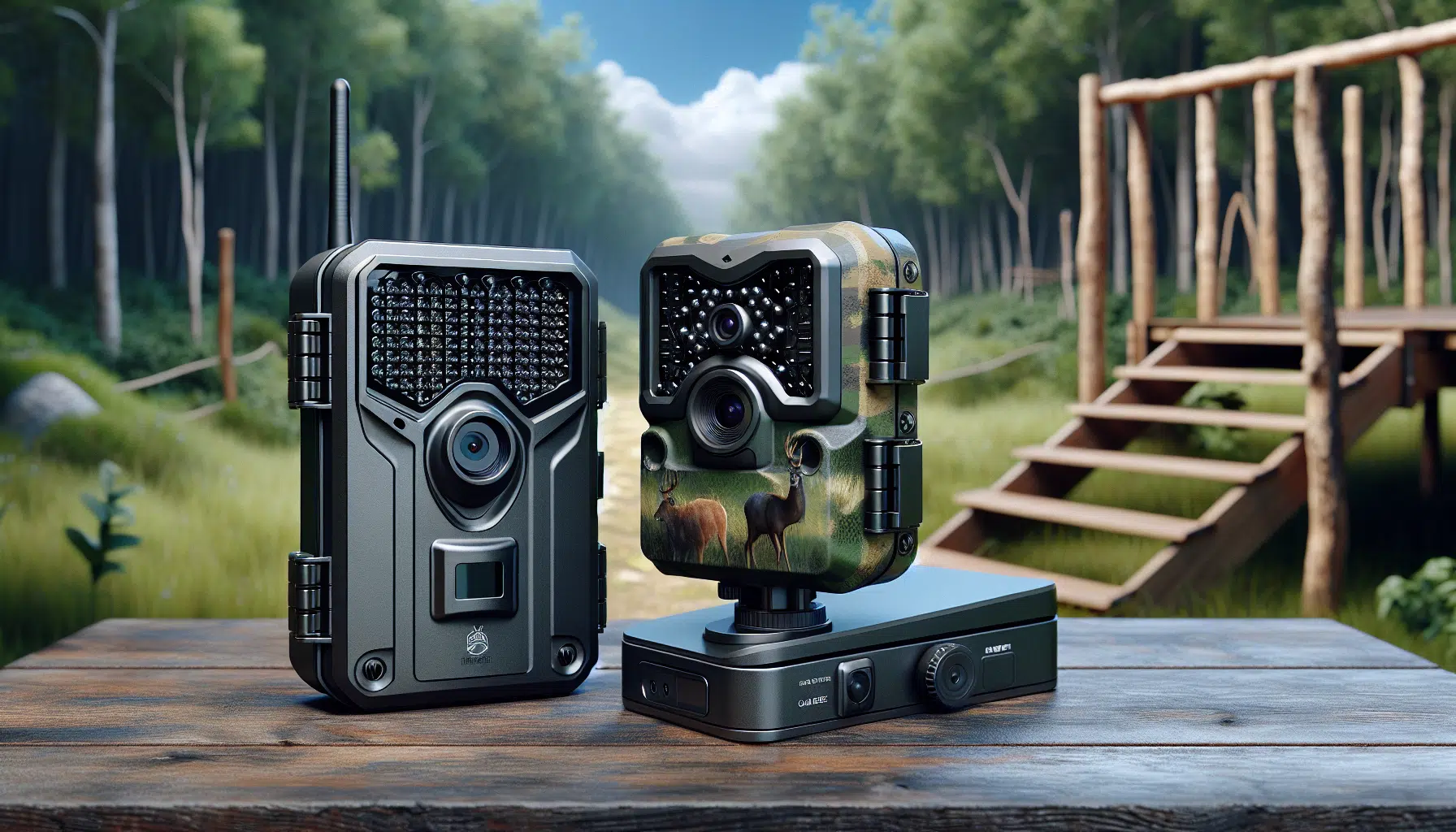
Which One I’d Buy With My Own Money.
I’d buy the Tactacam REVEAL for reliability and fewer headaches, and I’d buy the Stealth Cam Fusion only if price is the main thing and I can live with more tinkering.
I run cameras on a 65-acre lease in Pike County, Illinois, and I also hang them on public ground in the Missouri Ozarks where stuff gets stolen or beat up.
So I judge these two cams on what matters in real hunts, not spec sheets.
The Decision That Actually Matters: Signal and Reliability Over “Features”.
If your camera can’t send photos from the spots you want to hunt, none of the other talk matters.
I learned the hard way that “great app features” don’t mean anything when you have one bar of service and the camera just quits sending.
Back in November 2019 in Pike County, Illinois, the morning I killed my 156-inch typical, the only reason I was in that stand was a clean run of cell pics after a cold front.
Here is what I do before I buy or hang any cell cam now.
I check Verizon and AT&T coverage maps on my phone at home, then I still field-test one camera in the actual hollow or ridge I plan to hunt.
If you are hunting steep hill country like Buffalo County, Wisconsin, forget about “best camera on YouTube” and focus on the carrier that reaches the bottoms and shaded draws.
My Real-World Take: Tactacam REVEAL Strengths and Weak Spots.
I’ve had better luck with Tactacam REVEAL cameras just staying online and sending pictures.
That matters more to me than tiny differences in photo color.
Here is what I do with a REVEAL to keep it boring and dependable.
I run lithium AA batteries in early season, and I swap to an external battery pack once temps start living below 35 degrees.
I aim it north or south so the rising or setting sun doesn’t wash out every single buck picture.
I learned the hard way that “set it and forget it” is how you end up with a dead camera on the one week that counts.
I wasted money on $400 of ozone scent control years ago that made zero difference, and I put that same lesson into trail cams now.
I spend money where it makes my system reliable, like power and mounting, not hype.
If you want the kind of basics I care about, this connects to what I wrote about are deer smart because cameras in the wrong place can educate deer fast.
My buddy swears by running his camera low and tight to a trail, but I have found chest-high and angled down catches more mature bucks without them staring into the lens.
Find This and More on Amazon
The Tradeoff With Stealth Cam Fusion: Price Versus Frustration.
The Stealth Cam Fusion can be a solid budget play, but I’ve seen more “why aren’t you sending” behavior with them.
That is the tradeoff you are buying.
Here is what I do if I’m running a Fusion on public land where I might lose it.
I put it on the edge of a scrape line or staging area instead of the exact core bedding travel route.
I accept that if it gets ripped off, I lost a cheaper camera and not my favorite one.
Back in 2007, I gut shot a doe and pushed her too early and never found her, and I still think about it.
That hunt changed how patient I am, and it also changed how I handle trail cam data.
I do not charge into a spot just because I got one “good buck” picture if the wind is wrong or the access is loud.
This connects to what I wrote about do deer move in the wind because a windy day can both hide your access and also shift daylight movement.
Find This and More on Amazon
Carrier Choice: The Mistake Guys Make One Time and Then Never Again.
The biggest mistake is buying a camera first and hoping the signal works later.
That is backwards.
Here is what I do on my Pike County lease where one ridge gets service and the next ridge goes dead.
I run one “tester” camera for 72 hours in the exact tree, then I decide if that location gets a cell cam or a regular SD camera.
If you are hunting the Missouri Ozarks, forget about hanging a cell camera in the deepest cedar hole and focus on benches, saddles, and ridge points where signal actually reaches.
I’ve watched guys blame the brand when the real problem was the location.
Photo Quality Versus Actionable Info: Don’t Get Distracted.
I care about three things in a deer photo.
I want to know what deer it is, what direction it is traveling, and what time it moved.
I do not need a magazine cover shot to kill that deer.
When I am trying to time deer movement, I check feeding times first because a camera is just a window into a pattern.
If a camera sends me 40 pretty pictures but the timestamps are delayed or missing, that camera is not helping me.
My buddy swears the Fusion takes “better night pics” on his farm, but I have found the REVEAL gives me more consistent sends, and that wins in my book.
Trigger Speed and False Triggers: The Tradeoff In Thick Cover.
In thick cover, you can either miss deer or fill your plan with junk photos.
You do not get both perfect.
Here is what I do in the Missouri Ozarks where brush and vines cause false triggers all day.
I clear a 3-foot circle of grass and leaves in front of the camera, and I do not point it at waving branches.
I angle the camera slightly down the trail, not straight across, so the deer stays in the frame longer.
This connects to what I wrote about deer habitat because the thickest “best looking” cover is usually the worst place for a camera to behave.
Battery Life: Decide If You’re Okay With Mid-Season Maintenance.
Battery life is not just about money.
It’s about how often you are willing to walk in there and stink the place up.
Here is what I do once October hits and I’m bowhunting hard.
I set a schedule and only check cameras mid-day on a bad wind, usually between 11:30 a.m. and 2:00 p.m.
If conditions are wet and cold, I bring spare batteries in my pack and swap fast, then I get out.
If you want to tighten up your overall system, this connects to what I wrote about where do deer go when it rains because rain can cover your noise and also change daylight travel.
I learned the hard way that a dead camera can make you lose a whole week of intel right before a good front.
App and Plan Costs: Pick the One You’ll Actually Keep Running.
Cell plans are where “cheap camera” can turn into “expensive camera.”
I decide based on what I can afford to keep active from August through January.
Here is what I do to keep costs sane.
I run more cameras on lower send settings in summer, then I bump up frequency during the last 10 days of October and the first 10 days of November.
I don’t need 200 pictures of a doe group eating every night.
I just need to know when a target buck shows in daylight.
If you are new to deer behavior in fall, start with my breakdown of deer mating habits because rut timing changes what your camera data means.
Where Each Camera Fits My Hunting Style: Lease Versus Public Land.
On my Pike County, Illinois lease, I want the most reliable camera I can justify.
That is where the REVEAL makes sense for me.
On Missouri public land, I care more about “good enough” because theft is real.
Here is what I do on Mark Twain National Forest, which is still my best public land spot even though it takes work.
I hang cameras higher than eye level, and I use a stick to aim them down.
I also avoid obvious trees right on the main trail because that is where people look.
This connects to what I wrote about do deer attack humans because people worry about the wrong threats in the woods.
The bigger threat to your hunt is another hunter finding your camera and adjusting his plan off your work.
My Quick Rule of Thumb
If you have marginal cell service or deep hollows, buy the Tactacam REVEAL and test it for 72 hours before you trust it.
If you see a target buck hitting a scrape within 10 minutes of last light three times in a week, expect him to show in shooting light on the next cold front.
If conditions change to sustained high wind over 15 mph, switch to cameras on leeward ridges and staging areas instead of interior timber trails.
Settings I Actually Use: Avoid This Common Mistake.
The common mistake is maxing out photo bursts and video length, then wondering why batteries die fast and the plan hits limits.
I keep my settings simple.
Here is what I do on both the REVEAL and the Fusion to keep them useful.
I run 2 to 3 photo burst, medium delay, and I keep video off unless I’m watching a scrape and want angle info.
I name each camera by location and wind, like “NorthBeanField_SWWind,” so I don’t forget what spot it is tied to.
If you care about shot placement once that plan comes together, I go deeper on where to shoot a deer to drop it in its tracks because camera intel only matters if you finish the job.
FAQ
Is the Tactacam REVEAL worth the extra money over the Stealth Cam Fusion?
Yes, if you hunt limited days and you need the camera to work without babysitting.
No, if you are covering lots of locations and expect some cameras to get stolen or damaged.
Which camera is better for public land in the Missouri Ozarks?
I lean Fusion if I’m accepting loss risk, and I place it off the most obvious trails.
I lean REVEAL if it’s a hard-to-reach spot I won’t check often and I need consistent sends.
How high should I mount a cell trail camera to avoid theft?
I mount 8 to 10 feet high and angle it down, and I use a straight stick as a sight line.
In pressured areas, I also avoid the one perfect tree everyone would pick.
How often should I check a cellular camera in October and November?
I only walk in about every 14 to 21 days unless batteries or sends tell me there is a problem.
I’d rather miss a little data than burn out a spot with too many intrusions.
Do I need video mode for killing mature bucks?
No, and I almost never use it because it eats battery and data.
Photos with timestamps tell me what I need for stand choice and timing.
What is the biggest reason cell cameras fail during hunting season?
Bad placement for signal is number one, and dead batteries in cold weather is number two.
A lot of “camera problems” are really planning problems.
What I Tell My Friends If They Ask Me In The Parking Lot.
If I am spending my own money, I pick the Tactacam REVEAL for the spots that matter, and I use the Stealth Cam Fusion as a cheaper risk camera.
That mix fits how I hunt a 65-acre lease in Pike County, Illinois and public land in the Missouri Ozarks.
I hunt 30 plus days a year, and I do not have time for a camera that needs babysitting.
I learned the hard way that missing one week of intel can wreck your whole plan.
The Final Decision: Buy One “Anchor” Camera Or Buy Several “Info” Cameras.
This is the real choice most guys ignore.
Do you want one camera you trust, or three cameras that are “mostly fine.”
Here is what I do in Pike County where I’m hunting for one mature buck.
I run one REVEAL as my anchor camera on the best travel line near bedding, and I protect that spot with clean access and good wind.
Here is what I do on public land in the Missouri Ozarks where pressure and theft are real.
I spread cheaper cameras like the Fusion on secondary sign so I can learn the area without crying if one disappears.
The Mistake To Avoid: Letting Cell Pics Turn You Into A Stand-Hopper.
I learned the hard way that cell cameras can make you chase your tail.
You get a buck pic at 9:47 p.m., and you start moving stands like a squirrel.
Back in November 1998 in Iron County, Missouri, I killed my first deer, an 8-point buck, with a borrowed rifle.
I did it by sitting still and letting the woods settle, not by reacting to every new piece of info.
Here is what I do now to keep cameras from running my whole season.
I only move in for a hunt if the wind is right, the access is quiet, and the deer moved within 30 minutes of shooting light twice in a seven day window.
This connects to what I wrote about are deer smart because mature bucks notice pressure fast, even if you never see them notice.
My Personal Setup That Keeps Me Sane.
I do not run a fancy system.
I run a system I can keep up with while raising kids and working a job.
Here is what I do starting in late August.
I place cameras on the easiest access edges first, then I slide closer to bedding in October when patterns tighten.
Here is what I do with buck versus doe intel.
I do not overreact to doe groups, and I do not burn a spot for one midnight buck photo.
When I need a quick refresher on terminology for new hunters I take out, I point them to what is a female deer called and what is a male deer called so camp talk stays clear.
Where These Cameras Help Me Kill Deer, Not Just Collect Photos.
My best hunts come from cameras that answer one question.
Where can I sit without getting busted and still see daylight movement.
Back in November 2019 in Pike County, Illinois, I killed my biggest buck, a 156-inch typical, on a morning sit after a cold front.
The camera intel did not kill him, but it told me that travel line was active again after the weather flip.
Here is what I do when I get a good buck showing in daylight.
I hunt the first sit with the best wind I can get, and I do not “peek” at the spot the day before.
If you want to line up movement timing with what your camera shows, I check feeding times because it helps me judge if a deer is early, late, or just random.
Gear Money: Spend It On Power And Mounting, Not Gimmicks.
I have burned money on junk gear, so I get it.
The one that still annoys me is $400 on ozone scent control that made zero difference.
Here is what I do instead with trail cams.
I spend my money on lithium batteries, a solid strap or bracket, and an external pack when it gets cold.
My best cheap investment in the woods is still $35 climbing sticks I have used for 11 seasons.
I would rather have a steady camera and safe quiet access than the “coolest” feature set.
The Tradeoff In Hill Country: More Cameras Or Better Placement.
In hill country, you can waste a season blaming cameras for weak signal.
I have hunted places like Buffalo County, Wisconsin where a camera can work 200 yards away on the next finger ridge.
Here is what I do in terrain like that.
I place cameras on points, saddles, and upper third travel routes first, then I move lower only if I confirm service.
If you are hunting wet weather a lot, I plan checks around it, and this connects to where do deer go when it rains because rain can both cover you and shift movement.
Don’t Forget The Whole Point: A Camera Doesn’t Track A Deer For You.
I have lost deer I should have found, and I have found deer I thought were gone.
The one that haunts me is a gut shot doe in 2007 that I pushed too early and never recovered.
That mistake taught me patience, and it also taught me to slow down after “exciting” camera intel.
Here is what I do if I arrow or shoot a deer and the hit is not perfect.
I back out, mark last blood, and I do not let ego or panic force the next move.
If you want the step by step on the work after the shot, I use how to field dress a deer as my baseline, because clean meat starts with a clean process.
If you are trying to fill the freezer and plan freezer space, this connects to how much meat from a deer because size changes everything from cooler space to grind ratio.
My Wrap-Up On Tactacam REVEAL Vs Stealth Cam Fusion.
I like the REVEAL because it is boring, and boring is good.
I like the Fusion because it lets me cover ground without crying over every stolen camera.
If I could only own one, I would choose the Tactacam REVEAL and put it in the spot that actually kills the deer.
If I had to stretch dollars, I would run Fusions on the edges and save my “best” camera for the best tree.
That is how a regular guy who hunts a lot makes these two cameras work in the real world.