
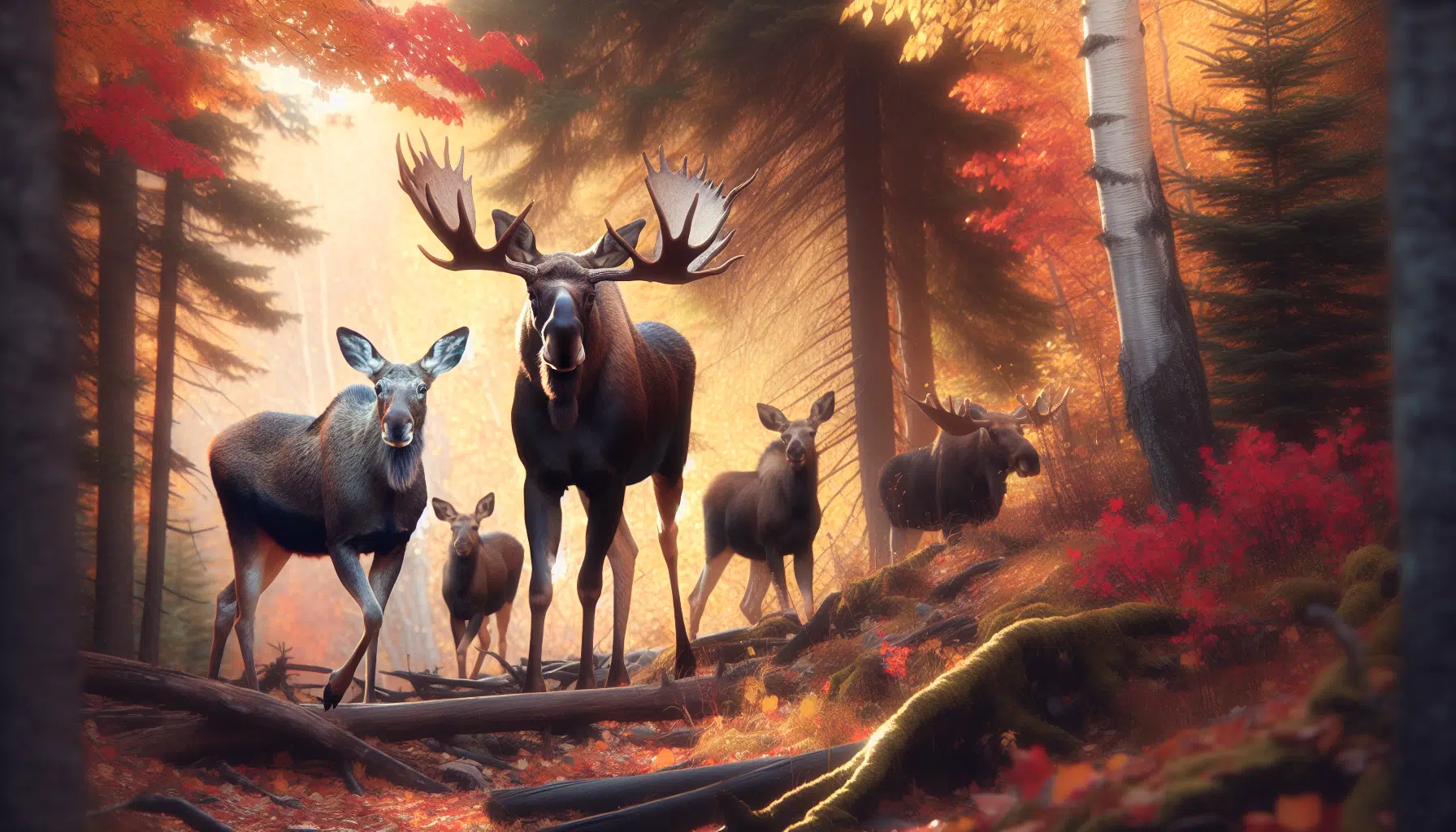
A moose is taller than almost any horse. A mature bull moose stands roughly 5.5 to 6.9 feet at the shoulder — the biggest Alaskan bulls approach seven feet — while an average riding horse stands about 4.8 to 5.4 feet at the withers. Only the very largest draft horses, such as big Shires and Belgians, match or exceed a moose’s shoulder height. Weight is closer: bull moose typically weigh 840 to 1,500 pounds, overlapping the 900 to 1,200 pounds of a typical riding horse and falling short of the heaviest 2,000-pound draft horses. Add a bull’s antlers, which can spread five to six feet, and the overall impression is of an animal at least as imposing as any horse — and far taller than the ones most people have stood beside.
People reach for the horse comparison because it is the biggest animal most of us have actually touched. When drivers describe their first roadside moose, “as big as a horse” is the phrase that comes out — and it turns out to be an understatement in height and roughly accurate in weight. This article puts real numbers on the comparison, explains why moose look even bigger than they measure, and covers what the size difference means in practice.
| Feature | Moose | Horse |
|---|---|---|
| Size (shoulder height) | About 5.5 to 6.9 feet; big Alaskan bulls near 7 feet | Riding horses about 4.8 to 5.4 feet; draft breeds 5.3 to 6.3+ feet |
| Weight | Bulls about 840 to 1,500 pounds; cows 660 to 1,100 | Riding horses about 900 to 1,200 pounds; draft horses 1,400 to 2,000+ |
| Antlers/Headgear | Bulls grow palmate antlers spanning up to 5 to 6 feet, shed yearly | None |
| Range | Boreal North America, Scandinavia, Baltics, Russia | Domesticated worldwide; feral herds on several continents |
| Habitat | Northern forest with lakes, wetlands, willow flats | Pastures and stables; feral bands on grassland and desert |
| Behavior | Solitary wild browser; strong swimmer; unpredictable when pressured | Social grazing herd animal, domesticated for millennia |
Height: The Moose Wins Clearly
Horse height is measured in hands at the withers, and most riding horses fall between 14.2 and 16.2 hands — roughly 4 feet 10 inches to 5 feet 5 inches. A moose’s shoulder sits far above that: cows commonly stand around 5.5 to 6 feet, and mature bulls of the big northern subspecies run 6 to nearly 7 feet at the shoulder, as covered in detail in our guide to how tall a moose is.
Put differently: a big bull moose’s shoulder is at about the height of a tall man’s head, and the top of his antlers can reach ten feet off the ground. Only exceptional draft horses — Shires, Clydesdales, Belgians, and Percherons standing 17 to 19 hands — occupy the same height class, and record-setting individual draft horses have exceeded 20 hands, taller at the withers than any moose. Those are outliers; against the horses people actually ride, the moose towers.
Weight: A Near Tie, Depending on the Horse
Weight tells a more balanced story. A typical light riding horse weighs 900 to 1,200 pounds — squarely inside the bull moose range of roughly 840 to 1,500 pounds and above the cow range of about 660 to 1,100. The heaviest wild moose on record, from Alaska and the Yukon, have been estimated at up to around 1,800 pounds, while big draft horses commonly reach 1,800 to 2,000 pounds and beyond. So the heaviest horses outweigh the heaviest moose, but a mature Alaskan bull outweighs nearly every saddle horse it could ever meet.
The distribution of that weight differs strikingly. A horse carries its mass on a long, level back between low withers and haunches. A moose is built high and forward: a humped shoulder, a massive deep chest, a huge drooping head, and comparatively light hindquarters, all on legs even longer than a horse’s. Those stilt legs are an adaptation for wading lakes and plowing through deep snow — and they are why a moose’s body sits at windshield height, which makes vehicle collisions with moose so much more dangerous than deer strikes.
Antlers Change the Silhouette
No horse carries anything overhead; a bull moose in autumn carries one of the largest display structures in the animal kingdom. The palmate antlers of a mature bull can span five feet or more — exceptional Alaskan racks approach six — and weigh dozens of pounds, grown from scratch every single summer and shed each winter. Antlers add no shoulder height, but they push a bull’s total visual height toward ten feet and are a large part of why an approaching moose reads as so much bigger than a horse of similar weight.
Different Animals, Different Lives
The size comparison is fun, but the two animals could hardly live more differently. The moose is the largest member of the deer family — see how it stacks up against its own relatives in our moose size comparison and elk vs moose guide — and it lives as a mostly solitary browser of willow, birch, and aquatic plants across the boreal north. It is a ruminant with a four-chambered stomach, an excellent swimmer, and a wild animal that tolerates neither saddle nor stable.
The horse is a grazing herd animal of open grassland, a hindgut fermenter rather than a ruminant, and it has been domesticated for roughly five thousand years. Horses outrun moose on open ground — top horse speeds exceed 40 mph while moose peak around 35 — but a moose will out-wade, out-swim, and out-winter any horse ever foaled.
Why Moose Look Even Bigger Than They Are
Wildlife officers hear it constantly: “It was bigger than a horse — it had to be a thousand pounds!” Often the witness is right. But moose also benefit from illusion: the long legs raise the body to eye level, the shoulder hump and bell (the dewlap under the chin) deepen the profile, the dark coat reads as mass, and antlers widen the outline by several feet. A moose standing in the road at dusk presents a taller, squarer, darker shape than any horse, which is why even experienced riders describe their first close moose as shockingly large.
Is a moose bigger than a horse?
Taller, yes — a mature moose stands well above nearly all riding horses at the shoulder. By weight it is roughly a tie with light horses, with big bull moose heavier than most saddle horses but lighter than the largest draft breeds. Overall, a bull moose is bigger than the average horse and comparable to a draft horse.
Can a moose outrun a horse?
Over open ground, no — galloping horses exceed 40 mph, while moose top out around 35 mph in short bursts. But moose maintain a ground-eating trot through bog, deadfall, and deep snow that would stop a horse entirely, so on their home terrain the moose effectively cannot be caught.
Which is more dangerous, a moose or a horse?
Statistically, horses injure far more people simply because millions of people handle them daily. Encounter for encounter, though, a moose deserves far more caution: it is a wild animal that may charge and strike with its front hooves when it feels cornered, especially a cow with a calf or a rutting bull. Give any moose a wide berth — more, not less, than you would give a strange horse.


