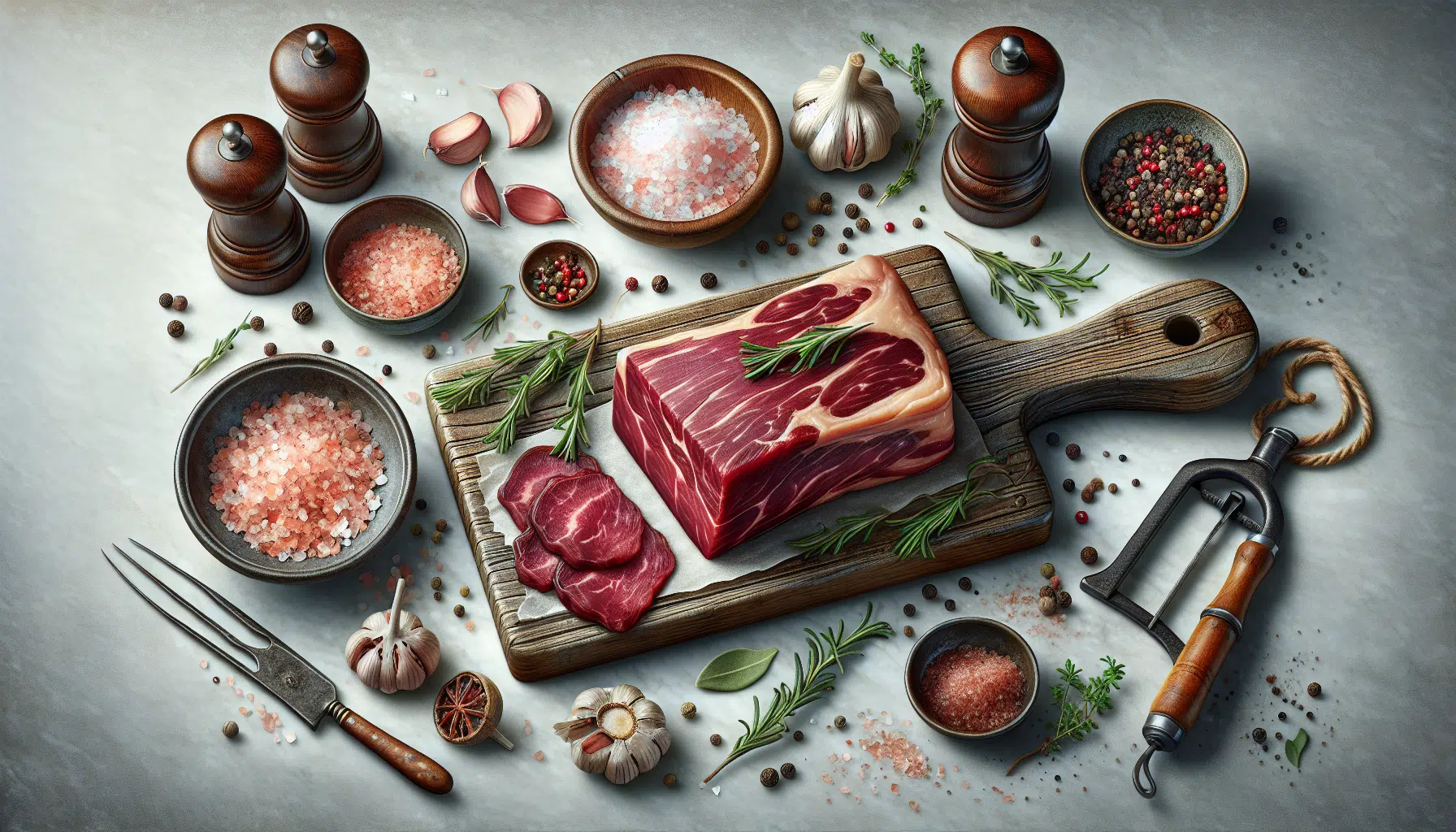
Pick Your Goal First, Or You Will Ruin Good Backstrap.
To cure venison for deli meat, I salt it with a measured cure, keep it cold for 7 to 12 days, then cook it low and slow to 145 degrees, chill it hard, and slice it thin.
If you try to “wing it” on the cure amount or rush the chill and slice, you get gray, salty meat that tastes like ham lunch meat from a gas station.
I have been hunting whitetails for 23 years, starting with my dad in southern Missouri when I was 12.
I process my own deer in the garage, and my uncle was a butcher, so I learned early that cured meat is about math and patience, not hype.
Decide If You Want “Ham Style” Or “Roast Beef Style” Deli Meat.
This is the first decision, because it changes what cut you pick and how you season it.
Ham style uses more sweet, smoke, and “breakfast” spice, and it works best on a solid muscle like a hindquarter roast.
Roast beef style is peppery and beefy, and it eats best from the eye of round or sirloin tip, not scraps.
Here is what I do for my house in Pike County, Illinois, because my kids will actually eat it.
I make one roast beef style for sandwiches, and one “holiday ham” style for snack plates.
If you want a deeper deer primer before you start butchering, this connects to what I wrote about how much meat from a deer so you plan your batches.
Pick The Right Cut, Or Your Deli Meat Will Slice Like Pot Roast.
The tradeoff is tenderness versus shape.
Backstrap tastes great, but it is expensive meat to turn into sandwich slices.
Hindquarter muscles give you the best deli logs because they are long, tight, and even.
Here is what I do after I drag one out of the Missouri Ozarks.
I separate the top round, bottom round, and eye of round, and I save the eye of round for deli meat almost every time.
I learned the hard way that silver skin left on a deli log turns into a chewy “band” that makes slices tear.
So I trim it clean, even if it costs me 2 ounces of meat.
If you are still getting your cutting flow down, it helps to read my step-by-step on how to field dress a deer because clean starts make clean cured meat.
Do Not Guess On Cure. Use The Right Cure #1 And Weigh The Meat.
This is the mistake that burns new guys.
Cure is not the same thing as salt, and “a handful” is how you make meat you should not eat.
I use Prague Powder #1, also sold as Insta Cure #1, for cooked deli meat.
I do not use Cure #2 for this, because Cure #2 is for dry-cured stuff like salami that hangs a long time.
Here is what I do every single time.
I weigh the venison in grams on a cheap kitchen scale, then I calculate the cure and salt off that number.
If you do not own a scale, buy one before you buy another camo jacket.
I wasted money on $400 ozone scent control that made zero difference, but a $14 scale actually matters in the garage.
My Base Cure Recipe For Venison Deli Meat (Per 1,000 Grams Of Meat).
This is my “works in real life” ratio, and it keeps you out of trouble.
For 1,000 grams of trimmed venison muscle, I use 20 grams kosher salt and 2.5 grams Cure #1.
That Cure #1 amount is the standard 0.25% cure rate.
For roast beef style, I add 10 grams brown sugar, 3 grams coarse black pepper, 2 grams garlic powder, and 1 gram onion powder.
For ham style, I add 25 grams brown sugar, 2 grams black pepper, and 1 gram ground mustard.
If you want it more “deli,” add 1 gram ground coriander and 1 gram paprika.
Do not dump in liquid smoke and think you are a pitmaster.
If you want smoke flavor, smoke it for real for 60 to 90 minutes at the start of the cook.
Choose Dry Cure Or Wet Brine, And Know The Tradeoff.
Dry cure is simple and makes a tighter deli slice.
Wet brine is more forgiving on moisture, but it can get “hammy” fast and feel bouncy.
Here is what I do for most deer.
I dry cure in a gallon zip bag, then I add just a splash of water if the bag looks dry on day two.
My buddy swears by a full wet brine in a bucket with a plate on top, but I have found it takes more fridge space and it is easier to spill.
If you are in a small fridge like I was growing up, bags win.
Bag It, Flip It, And Give It Time In The Fridge.
The decision is cure time, and it depends on thickness.
A 2.5-inch thick eye of round needs more days than a 1.5-inch backstrap chunk.
Here is what I do.
I rub the dry cure into the meat, put it in a zip bag, press the air out, and lay it flat in a pan in the fridge at 34 to 38 degrees.
I flip the bag once a day, morning or night, and I massage it for 10 seconds.
For 2 to 3 inch thick roasts, I cure 10 days.
For 1.5 to 2 inch pieces, I cure 7 days.
I learned the hard way that “just one more day” does not fix under-cured meat if you did not measure right.
So I measure right and stick to the schedule.
Rinse Or Do Not Rinse, But Make A Choice.
This is a tradeoff between salt level and surface flavor.
If you rinse hard under water, you can wash off your pepper and garlic crust.
If you do not rinse at all, some batches come out too salty, especially if you used table salt by accident.
Here is what I do.
I do a quick rinse for 5 seconds, then I pat it bone dry with paper towels.
Then I re-coat the outside with black pepper and a little garlic powder if I am doing roast beef style.
If you are hunting hard and sweating like I do in early season in Kentucky, forget about fancy finishing steps and focus on drying it well so it browns right.
Netting And Shape Matter If You Want Clean Slices.
The decision is if you care about looks or just taste.
If you want pretty deli slices for sandwiches, you need a tight cylinder.
Odd shapes slice like junk and fall apart.
Here is what I do with uneven roasts.
I fold thin ends under, then I wrap the roast tight with butcher’s twine every 1 inch.
Elastic meat netting works too, but twine is cheaper and I always have it.
Back in November 2019 in Pike County, Illinois, after I shot my 156-inch typical the morning after a cold front, I turned the eye of round into deli meat.
That roast was shaped like a football, and twine saved it.
Cook It To Temperature, Not To Time, Or You Will Get Chalky Venison.
This is the biggest mistake after cure math.
Venison has almost no fat, so it goes from juicy to dry fast.
Here is what I do in my garage kitchen setup.
I cook it at 225 degrees in the oven until the center hits 145 degrees on a probe thermometer.
That usually takes 1.5 to 3 hours depending on thickness.
I pull it at 145, then I tent it in foil for 10 minutes.
If you want a darker edge, you can finish at 450 degrees for 6 minutes, but watch it like a hawk.
If you own a good meat thermometer, it matters more than any scent spray ever did.
I like the ThermoPro TP19 because it reads fast and mine survived two seasons of getting tossed on a workbench.
Find This and More on Amazon
Decide If You Want Smoke, And Do Not Overdo It.
Smoke is a tradeoff between flavor and kid-friendly sandwiches.
Too much smoke makes venison taste like a campfire hoodie.
Here is what I do when I want light smoke like a deli.
I smoke at 200 to 225 degrees for 45 to 75 minutes with hickory, then I finish in the oven if I need to.
In the Missouri Ozarks, I am usually processing deer with limited time, so oven-only is fine and still tastes good.
My buddy swears apple wood is the only way, but I have found hickory in small doses tastes more like store deli.
Chill It Hard Before Slicing, Or Your Slices Will Shred.
This is where patience pays off.
Hot deli meat slices like wet bread.
Here is what I do.
I cool it on the counter for 20 minutes, then I wrap it tight and put it in the fridge overnight.
If I am in a hurry, I put it in the freezer for 45 minutes, but I do not let it start freezing.
The next day, it slices clean and stacks nice.
Pick A Slicer Plan, Or You Will End Up With “Jerky Chunks.”
The decision is knife slices versus slicer machine.
A sharp knife works, but your slices will be thick and uneven.
A home slicer makes real deli meat, but it is one more thing to clean.
Here is what I do for my family of four.
I use a Chefman electric deli slicer, and I set it thin enough that I can almost see light through the slice.
I learned the hard way that cheap slicers bog down if the meat is not chilled hard.
So I chill first, then slice, and I clean it right away so it does not stink up the shop.
Find This and More on Amazon
My Quick Rule of Thumb
If your venison roast is thicker than 2 inches, cure it 10 days and flip the bag once a day.
If you see gray, dry edges while cooking, expect the center to get chalky unless you pull it at 145 degrees.
If conditions change to “you need slices today,” switch to a 45 minute freezer chill before slicing, not a longer cook time.
Do Not Repeat My Worst Tracking Mistake In The Kitchen.
I am not a professional guide or outfitter, but I have done this long enough to know where people get hurt.
Rushing is the common problem, in the woods and in the kitchen.
In 2007 I gut shot a doe, pushed her too early, and never found her, and I still think about it.
I learned the hard way that bad choices stack up fast once you start hurrying.
So with cured deli meat, I do not rush cure time, I do not rush cook temp, and I do not rush the chill.
Storage Choices Matter, And The Freezer Can Save A Batch.
This is a tradeoff between convenience and texture.
Fridge storage keeps texture perfect, but you only get about 7 days before flavor turns.
Freezer storage is easy, but it can dry slices out if you package sloppy.
Here is what I do.
I portion 1-pound stacks, wrap them tight in plastic wrap, then put them in a freezer bag with the air pressed out.
I label the bag with the month and year, like “Oct 2025 roast beef.”
Then I thaw in the fridge for 24 hours, not on the counter.
Use Hunting Knowledge To Make Better Deli Meat, Not Just More Meat.
Older bucks can taste stronger, and that affects how I season.
If I think the deer is older, I go heavier on pepper and garlic and lighter on sweet.
If you want context on deer age and behavior, this connects to what I wrote about are deer smart because mature deer act different and often live in thicker, stinkier cover.
Back in the Upper Peninsula Michigan on a snow trip, we tracked a buck for 350 yards and he stunk like a wet dog when we finally got hands on him.
That kind of deer still makes good deli meat, but only if you trim and season like you mean it.
FAQ
How long should I cure venison for deli meat?
I cure 7 days for 1.5 to 2 inch thick pieces, and 10 days for 2 to 3 inch thick roasts.
If it is thicker than 3 inches, I split it or plan 12 days and keep it at 34 to 38 degrees.
Can I cure venison deli meat without Cure #1?
I do not do it, because Cure #1 is what makes cured meat safe and consistent at deli thickness.
If you skip it, you are just making a salty roast, and the color and flavor will not be the same.
What internal temperature should cured venison deli meat reach?
I pull it at 145 degrees in the center and rest it 10 minutes.
If you cook it to 160 degrees, it will still be edible, but it will slice drier and taste more like overcooked pork.
Why is my cured venison deli meat gray inside?
Gray usually means you under-measured cure, did not cure long enough for thickness, or the cure did not contact the meat evenly.
Next batch, weigh the meat, use 0.25% Cure #1 by weight, and flip the bag daily.
Why does my venison deli meat taste too salty?
You either used too much salt, used fine table salt, or did not do a quick rinse and dry before cooking.
Next batch, use kosher salt and stick close to 2% salt by weight, then rinse 5 seconds and pat dry.
Do I need to soak cured venison in water before cooking?
I do not soak, because it pulls flavor off the outside and can make the center bland.
If you blew it on salt, a 30 minute soak can help, but it is a fix, not the plan.
When I am trying to time my processing nights around deer movement, I check deer feeding times first so I am not up until 2 a.m. after an evening sit.
If you are still learning deer basics for your kids, I keep it simple in my pages on what a male deer is called and what a female deer is called.
And if you want to match your butchering plan to where you hit them, this ties into where to shoot a deer to drop it in its tracks, because bloodshot meat changes what I turn into deli.
My Real-World Wrap Up, From The Stand To The Sandwich.
I make venison deli meat because it turns one clean muscle into 20 to 30 lunches that actually get eaten.
And it keeps me from grinding everything just because it is easy.
Here is what I do after a good kill and a clean breakdown in the garage.
I pick the eye of round or sirloin tip, trim it hard, cure it by weight, cook it to 145 degrees, chill it overnight, and slice it thin.
I learned the hard way that cured meat punishes shortcuts.
In the Missouri Ozarks on public land, I can cut corners on comfort and still kill deer, but I cannot cut corners on cure math and expect good deli.
If you are hunting big-buck country like Pike County, Illinois, forget about “saving” a rough cut for deli meat and focus on using a clean, even muscle.
You will taste every sloppy trim job in a cured slice.
Back in November 1998 in Iron County, Missouri, when I shot my first deer, an 8-point buck with a borrowed rifle, we wasted a bunch of meat because we did not know any better.
Now I look at a hindquarter and see sandwich stacks, not just roasts and burger.
My buddy swears you can make deli meat with whatever seasoning mix you find at the store and just “cook it till it feels done.”
I have found the only thing that makes it repeatable is a scale, a probe thermometer, and enough patience to let it chill before you slice.
I am still the same guy who burned money on gear that did not work.
I would rather spend $14 on a scale and $20 on Cure #1 than waste a whole roast and end up mad at myself.
If you want one final reminder, treat this like tracking a deer.
Do the boring parts right, and you get to enjoy the best part later.
When I want to plan meals around how much venison I have left, I go back to how much meat from a deer so I do not run out in February.
And if you are teaching kids and keeping it simple like I do, it helps to keep terms straight with what a baby deer is called so they learn the right words while they are learning the right habits.