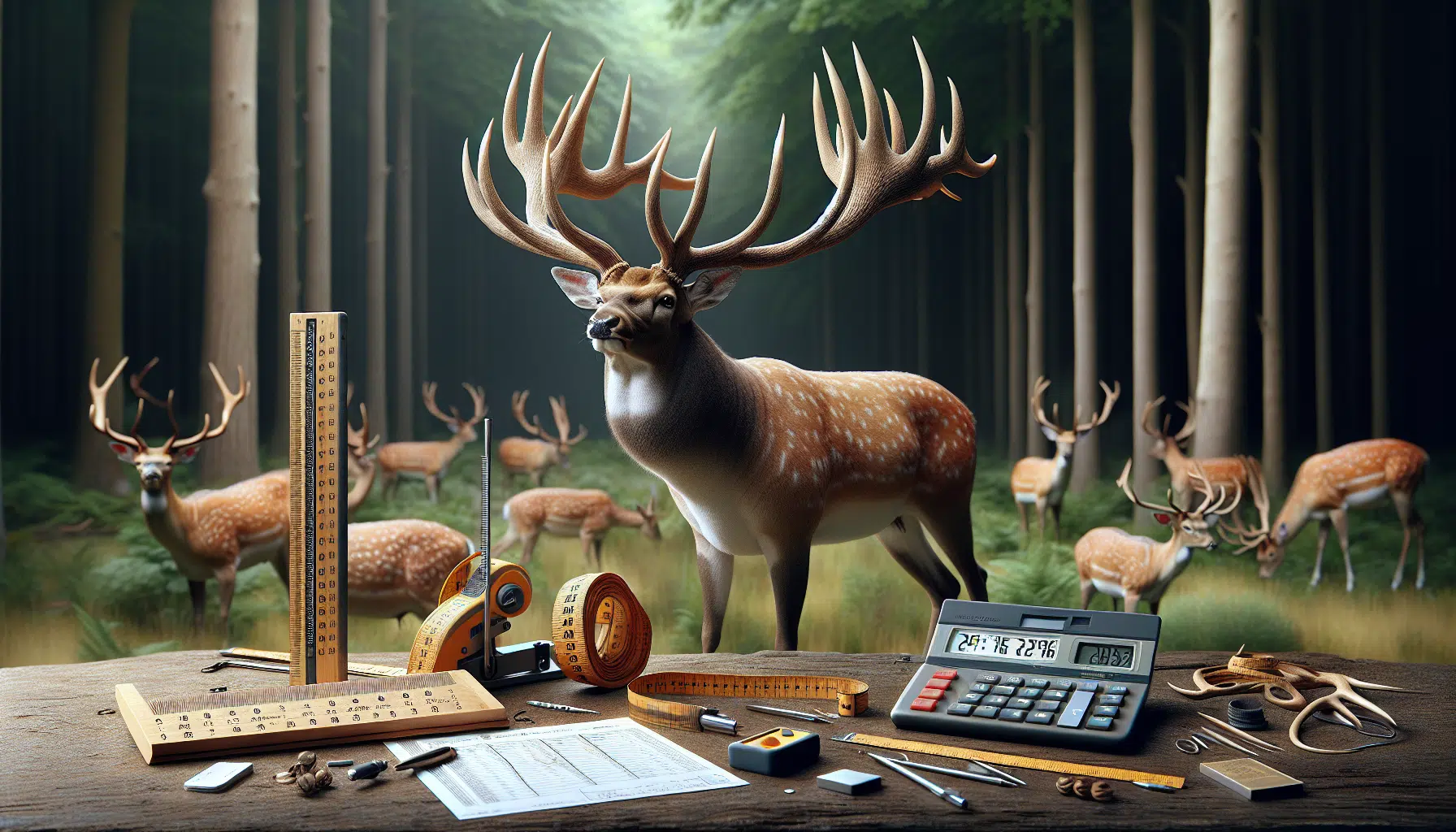
Deer and goats are not close relatives, even though both are hoofed, cud-chewing browsers of similar size. Deer belong to the family Cervidae and grow branched antlers of solid bone that are shed and regrown every year; goats belong to the family Bovidae — with cattle, sheep, and antelope — and grow permanent, unbranched horns of keratin over a bony core that never fall off and never stop growing. Deer are wild animals on every continent they inhabit, while goats were among the first livestock ever domesticated, some 10,000 years ago. The two do overlap in one famous way: both are agile browsers that prefer leaves, twigs, and shrubs over grass — which is why gardeners often can’t tell which one raided the roses.
“Is a deer just a wild goat?” sounds like a child’s question, but it points at a real biological distinction — and at a genuinely interesting case of two separate families converging on the same feeding style. Below we compare taxonomy, headgear, bodies, behavior, and diet, and answer the questions people actually search for, from whether the two can crossbreed to which one is eating your garden.
| Feature | Deer | Goat |
|---|---|---|
| Size | From 1 foot tall (pudu) to nearly 7 feet (moose); whitetails about 3 feet | Domestic goats about 1.5 to 3 feet at the shoulder; wild ibex similar |
| Weight | Roughly 15 pounds (pudu) to 1,500+ pounds (moose) | Roughly 45 to 300 pounds depending on breed |
| Antlers/Horns | Branched bone antlers, males only (plus caribou females), shed yearly | Permanent unbranched keratin horns in both sexes, never shed |
| Range | Wild across the Americas, Europe, Asia, northwest Africa; introduced elsewhere | Domesticated worldwide; wild goats in Eurasian mountains; feral herds globally |
| Habitat | Forests, edges, grasslands, tundra, wetlands | Farms and rangeland; wild and feral goats on cliffs, scrub, and islands |
| Behavior | Wary, mostly crepuscular wild browser | Bold, social, domesticated browser and climber |
Two Different Families of Ruminants
Deer and goats are both even-toed ungulates and both ruminants — four-chambered stomach, cud-chewing, cloven hooves — but the family split runs deep. The roughly 50 deer species of the family Cervidae range from the tiny pudu to the moose. Goats sit in the family Bovidae, subfamily Caprinae, alongside sheep; the domestic goat descends from the wild bezoar ibex of the Middle Eastern mountains. The bovid family also contains cattle, bison, and the true antelopes, which is why our deer vs antelope comparison turns on many of the same family-level differences.
Because the families diverged tens of millions of years ago, deer and goats cannot hybridize — no matter how many rural legends claim otherwise.
Antlers vs Horns
The headgear is the textbook difference, explained fully in our antler vs horn guide. Deer antlers are solid bone, grown fresh each year under velvet, hardened for the autumn rut, and dropped in winter — among the fastest-growing tissues known in mammals. With few exceptions (notably caribou), only male deer grow them, and they branch.
Goat horns are the opposite in nearly every respect: a living bone core sheathed in keratin, present in both sexes in most breeds, never branched, never shed, growing slowly throughout life. Cut a horn off and it does not grow back; a deer’s antler regrows on schedule the next summer. If you find a shed lying in the woods, it came from a deer relative — goats leave no such calling cards.
Body, Tail, and Eyes
Mid-sized deer and large goats can weigh the same 100 to 200 pounds, but they read differently at a glance. Deer are long-legged and fine-boned, built for speed and leaping, with large mobile ears, a long neck, and a short tail. Goats are stockier and shorter-legged, built for climbing and clambering, often bearded, and many carry a short upright tail. One odd, reliable close-range difference: goats have horizontal bar-shaped pupils — an adaptation for panoramic grazing vigilance — while deer pupils look conventionally rounded-oval like most mammals’.
Deer also possess something no goat has: facial and leg scent glands (preorbital, tarsal, metatarsal, interdigital) that drive much of their social signaling, and a coat that molts between distinct summer and winter colors in species like the white-tailed deer.
Wild vs Domesticated
Perhaps the deepest practical difference is history with humans. Goats were domesticated around ten millennia ago and now number in the hundreds of millions worldwide, kept for milk, meat, fiber, and brush clearing; escaped populations have gone feral on islands and rangelands across the planet, often with severe ecological consequences.
Deer, despite thousands of years of park-keeping and farming (notably red deer and reindeer operations), have never been domesticated in the full sense. They remain flighty, seasonal, wild-mannered animals; even farmed deer are handled as semi-wild stock. That temperament gap — bold, curious, trainable goat versus hair-trigger, fence-jumping deer — is obvious to anyone who has kept both behind the same fence.
Browsing Behavior: Why They Get Confused in the Garden
Here is where the two genuinely converge. Both deer and goats are browsers by preference — leaf, twig, vine, and shrub eaters rather than dedicated grass grazers — with narrow muzzles and agile lips suited to selective feeding. Goats famously stand on their hind legs (and climb low trees) to strip foliage to a neat “browse line”; deer create the same browse line up to whatever height they can reach, around six feet for a stretching whitetail.
The forensic differences: deer lack upper front teeth, so they tear twigs, leaving ragged, shredded ends, while goats (which also lack upper incisors but bite against a hard dental pad with a stronger shearing action) and rabbits leave cleaner cuts. Deer leave heart-shaped split tracks and pelleted droppings very similar to a goat’s — but goats rarely roam free, so if your garden is being raided at dawn by something that jumped a four-foot fence, bet on the deer.
Can a deer breed with a goat?
No. Deer (Cervidae) and goats (Bovidae) belong to different families that separated tens of millions of years ago, with different chromosome counts and reproductive biology. No verified deer-goat hybrid has ever existed; photos claiming otherwise show unusual goats, muntjacs, or misidentified animals.
Is a deer closer to a goat or a cow?
Neither, really — goats and cows are both bovids, so they are closer to each other than either is to any deer. Deer form their own family within the same ruminant infraorder. In the family tree of hoofed mammals, the deer branch sits beside the entire bovid branch, which contains goats, sheep, cattle, bison, and antelope together.
Do goats and deer eat the same plants?
To a remarkable degree, yes — both favor woody browse, forbs, brambles, and tender garden plants, and both will strip bark in hard times. Goats are the less picky of the two, happily eating thistles, poison ivy, and brush that deer pass over, which is why goats are hired out for vegetation clearing while deer are merely blamed for it.