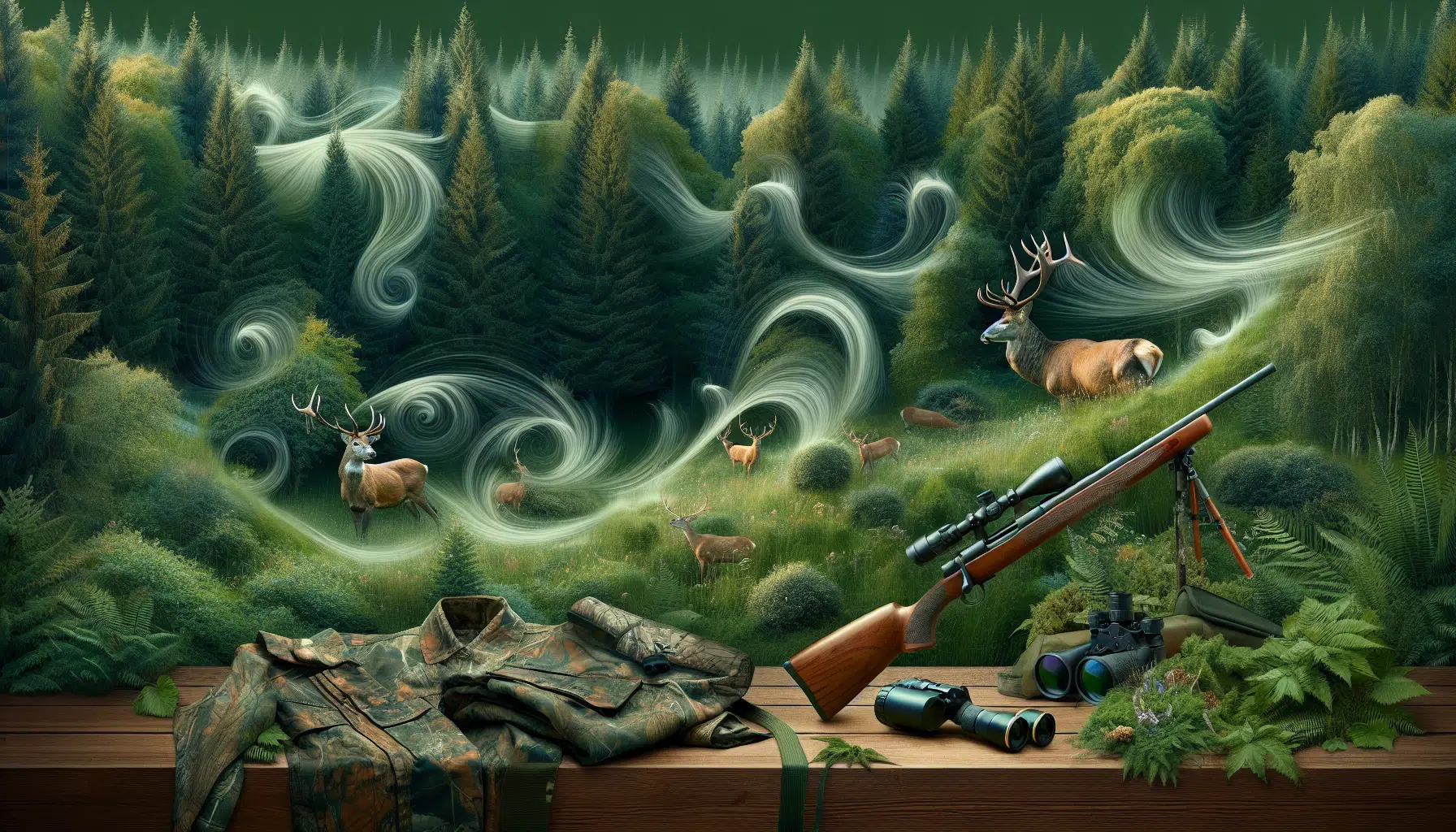
Stop Guessing. Use Wind And Thermals Like A Trap.
To read wind thermals for deer hunting, I treat it like two winds at once.
At daylight and in the evening, thermals usually matter more than the forecasted wind.
If I can’t explain where my scent is going for the next 30 minutes, I do not climb the tree.
I hunt 30 plus days a year, mostly with a bow, and the wind has ruined more sits than bad shooting ever has.
Pick Your Hunt: Ridge, Bottom, Or Flat Ground.
This is the first decision, because thermals act totally different in each place.
If you ignore the terrain, you will swear “the wind switched” when it really didn’t.
Back in November 2019 in Pike County, Illinois, I killed my biggest buck, a 156 inch typical, on a morning sit after a cold front.
The forecast said 8 mph out of the northwest, but the thermal pull in that drainage was sliding my scent downhill until the sun hit the opposite slope.
In the Missouri Ozarks, I hunt steep hollers and benches on public land, and thermals are the whole game.
In Southern Iowa style ag country, thermals still matter, but a steady 12 mph wind can cover a lot of sins.
Decide If You Are Hunting “Shade Side” Or “Sun Side” That Morning.
This is a tradeoff, because deer like shade for comfort, but sun warms slopes and changes air faster.
If you set up wrong, you will get busted by a doe you never saw down below.
Here is what I do before daylight on hill country, like Buffalo County, Wisconsin ridges or Ozark hollers.
I look at where first sunlight will hit, and I assume that slope will start pulling air uphill first.
If I set a stand on the sun side in the morning, I plan for my scent to rise sooner than I want.
If I set on the shade side, I plan for downhill thermals to last longer, which can help me cover a trail above me.
I learned the hard way that “good wind” on an app can still blow your scent right into the bottom.
Back in 2014 in the Missouri Ozarks, I hung a stand above a pinch, felt a perfect face wind, and still got winded by a doe 60 yards downhill.
My Quick Rule of Thumb
If it is the first 45 minutes of daylight on a clear sky, I assume downhill thermals and I hunt above the trail, not below it.
If you see milkweed drifting level for 10 seconds then suddenly sinking, expect deer to use the low side and scent check the bottom.
If conditions change to full sun hitting the slope or a steady wind over 10 mph, switch to a stand that uses the “main wind” and stop trusting the thermal pull.
Use Milkweed, Not “I Think.”
This is a mistake I see all the time, and I did it for years.
I used to hang a stand based on feel, then wonder why I kept getting busted.
Here is what I do now.
I carry a little bottle of milkweed pods in my left cargo pocket, and I drop a few strands every time I reach a new spot.
I want to see three things.
I want to see if it rises, sinks, or slides sideways like it is following a creek.
If it is sliding, that is a drainage pull, and it can beat a light wind.
If it is rising steady, that slope is warming, and I stop expecting the bottom to “hold” my scent.
My buddy swears by powder puffers, but I have found milkweed shows the slow stuff powder hides.
Powder looks cool, but it falls fast and tricks you on calm days.
Make A Call: Hunt The Bottom, Or Stay Off It.
This decision matters most on public land, because pressured deer live where it is hard to hunt clean.
The bottom feels “protected,” but it is also where your scent pools when thermals dump.
If you are hunting a tight creek bottom in the Missouri Ozarks, forget about trying to “ground hunt the trail” at daylight.
Focus on getting 1 third of the way up the slope with an exit route that does not touch the bottom.
In Pike County, Illinois, on my 65 acre lease, I can sometimes get away with a bottom sit because my entry is clean and the deer are used to less pressure.
On Mark Twain National Forest, the same sit gets me busted because those deer act like they have PhDs.
When I am trying to understand how cagey deer can be, I go back and read are deer smart because it explains why pressured deer use wind like a weapon.
That connects to why a “perfect wind” can still fail once deer start circling and checking access trails.
Thermals Change Faster Than You Think On Bluebird Days.
This is a tradeoff, because clear skies also get deer moving after a front.
But clear skies mean sun-driven thermals flip hard and fast.
On a bluebird morning after a cold front, I plan my sit like it has an expiration time.
I will hunt the first 2 hours, then I am ready to move or climb down if milkweed says I am cooked.
Back in November 2019 in Pike County, that buck came in at 8:35 a.m.
At 9:10 a.m., my milkweed started lifting, and I was done in that tree even though the forecast wind never changed.
If you want a separate read on steady wind days, this connects to what I wrote about do deer move in the wind because wind speed changes how much thermals matter.
A 3 mph “light wind” is basically thermal season in hill country.
Stop Overpaying For Scent Control. Spend That Energy On Setup.
I have strong opinions here, because I burned money before I learned what matters.
I wasted $400 on ozone scent control that made zero difference in real woods wind.
Here is what I do instead.
I shower with unscented soap, wash clothes in Tide Free and Gentle, and I focus on never letting my scent hit the deer.
If your wind is wrong, no spray fixes it.
If your wind is right, you can get away with a lot, even on public land.
Hunt The “Thermal Tunnel” On Evenings, But Don’t Get Greedy.
This is where guys mess up, because evening hunts feel easier.
Thermals usually pull downhill in the last hour, and that can hide your scent above the trail.
Here is what I do on evening sits in hill country, like Buffalo County type ridges or Ozark benches.
I set up just high enough that my scent dumps past the main deer trail and into dead space.
The mistake is setting up too low because you want a 15 yard shot.
That puts your scent right where deer are already traveling, and the first doe will blow the whole group out.
If you are hunting a field edge in Southern Iowa, forget about obsessing over “downhill thermals” like you are in mountains.
Focus on a crosswind that keeps your scent off the field and off the entry trail deer use to stage.
When I am trying to time evening movement, I check feeding times first because it helps me decide if I need to be closer to bedding or closer to food.
Then I pick the tree that gives me the cleanest scent path, even if it makes the shot 27 yards instead of 17.
Use The “Creek Scent Highway” On Purpose, Or Avoid It Completely.
This is a decision, because water pulls air like a ditch pulls a rolling ball.
Creeks and drainages can drag your scent sideways for 80 yards even on a calm day.
Here is what I do.
If I am hunting above a creek, I either commit to letting my scent ride that creek away from deer, or I stay far enough that it cannot grab me.
I learned the hard way that “my wind is parallel” can still be bad.
Back in 2016 in the Missouri Ozarks, I hunted a bench thinking I had a safe wind, and my scent slid down to the creek and then curved right into a bedding point.
Stand Height Is A Lever, Not A Badge Of Honor.
This is a tradeoff, because higher can help your scent clear trails, but it can also get you skylined and make bad shots.
I pick height based on where my scent stream goes, not ego.
Here is what I do in thick cover, like the Missouri Ozarks.
I stay 14 to 18 feet up because shots are close, and I need lanes more than I need “high scent.”
Here is what I do in open timber and field edges, like Pike County, Illinois.
I might go 20 to 24 feet if it helps my milkweed float over a trail and into a cut corn field.
The best cheap investment I ever made was $35 climbing sticks I have used for 11 seasons.
They are not fancy, but they let me adjust height fast and hunt trees other guys ignore.
Don’t Let Access Ruin Your Thermal Plan.
This is the mistake that makes good wind useless.
Your entry route leaves scent, and thermals can drag it right into bedding before you even get settled.
Here is what I do on mornings.
I walk ridgelines instead of bottoms whenever I can, even if it adds 350 yards.
Here is what I do on evenings.
I try to enter from the low side only if my scent will dump away from where deer will stage.
I have two kids I take hunting now, so I keep it simple.
I tell them, “If we walk where we expect deer to walk, we already lost.”
If you are new to deer basics, start with my breakdown of deer habitat because bedding and travel routes decide where your wind problems show up.
Once you know where they bed, you can plan an entry that does not poison the whole area.
Wind Apps Help, But Only If You Treat Them Like A Starting Point.
This is a tradeoff, because apps are handy, but they make guys lazy.
An app can’t feel that cold air dumping into a hollow at 7:05 a.m.
Here is what I do.
I check the hourly wind direction and speed, then I confirm with milkweed at the truck, at the base of the tree, and from the stand.
If the app says 6 mph and my milkweed hangs dead, I assume thermals are in control.
If the app says 14 mph and milkweed is ripping, I assume the main wind wins and I quit worrying about little swirls.
Rutting Bucks Use Wind Differently, So Adjust Your Thermal Thinking.
This is a decision, because you can either hunt where you think the doe trail is, or where the buck will scent check it.
I would rather kill the buck that never steps on the trail than watch does all morning.
When I want a refresher on how bucks cruise and check does, I look at deer mating habits
This matters because your thermal stream might be safe for does but deadly once a buck swings.
Back in November 1998 in Iron County, Missouri, I killed my first deer, an 8 point buck, with a borrowed rifle.
I did not understand wind at all, and I got lucky because he came in fast and dumb chasing does.
Now I assume a mature buck will try to put the wind in his nose before he commits.
If my setup relies on “he won’t come from downwind,” I pick a different tree.
Gear I Actually Use To Read Thermals, And What I Quit Buying.
I am not a gear snob, because I grew up poor and learned public land before I could afford leases.
But I will pay for simple stuff that works every sit.
For thermals, I carry milkweed and a small windicator bottle.
I like the Code Blue Wind Detector because it shows quick swirls at the base of the tree, and it is about $9 at Walmart.
Find This and More on Amazon
I wasted money on scent gadgets and switched to just carrying more milkweed.
That one change helped me kill more deer than any spray ever did.
For mobile setups, I run a Lone Wolf Custom Gear Assault II stand a lot, and it has held up great for me.
It was $279 when I bought mine, and the seat is still quiet after years of abuse.
Find This and More on Amazon
My buddy swears by high dollar anemometers, but I have found they are one more thing to fumble with at full draw.
Milkweed tells me what I need to know, and it does it in the exact spot my scent is coming from.
Common Thermal Traps I Watch For Every Season.
This section is all mistakes to avoid.
These are the little setups that feel right and hunt wrong.
Trap one is the “bowl.”
If you sit above a bowl at daylight, your scent can dump in and just sit there like smoke in a jar.
Trap two is the “saddle wind.”
Saddles swirl, and a lot of them have two drainages fighting each other, so your wind can spin 180 degrees in five seconds.
Trap three is the “warm front evening.”
If it is 62 degrees at sunset in early November and humid, thermals can get lazy and do weird sideways stuff instead of dumping clean downhill.
If you are hunting warm, wet weather, forget about expecting perfect downhill pulls.
Focus on a stand that is safe with the main wind, because thermals can stall and hang.
This ties into what I wrote about where do deer go when it rains because wet conditions change where deer bed and how they travel.
If deer shift to thicker cover, your wind issues get worse because you are closer to them.
FAQ
How Do I Know If Thermals Or The Main Wind Are Winning?
If your milkweed drifts steady in one direction for 15 seconds, the main wind is winning.
If it rises and sinks or follows a ditch even when the forecast says steady wind, thermals are winning.
What Is The Best Time Of Day To Trust Thermals The Most?
The first hour after daylight and the last hour before dark are the most thermal-driven for me.
Midday with a steady 10 mph wind is when I stop worrying as much about thermal pull.
How High Should I Set My Stand To Beat A Deer’s Nose?
I start at 18 feet and adjust based on what milkweed does from the platform.
If my scent is dropping into the trail, I either go higher or I pick a different tree.
Why Do I Get Busted In Creek Bottoms Even With A “Good Wind?”
Because drainages pull your scent like a vacuum, and it can bend around corners.
If you keep getting busted, move up the slope and keep your access out of the bottom.
Can I Hunt A Spot If The Wind Is Wrong But The Thermals Are Right?
Yes, but only if the main wind is under about 6 mph and consistent, and your milkweed proves the thermal pull is steady.
If the main wind is 10 mph plus, it will usually overpower thermals and you will get surprised.
Two Wind Setups I Use A Lot In Real Places.
This is about decisions you can copy, not theory.
I use these setups because I have watched them work and fail.
Setup one is a morning ridge sit in the Ozarks.
I set up on the upper third of the leeward slope with a crosswind, and I expect downhill thermals until sunlight hits that side.
Here is what I do to keep it clean.
I enter from the ridge top, I drop milkweed every 60 yards, and I do not cut down into the hollow until I am ready to climb.
Setup two is an evening funnel on my Pike County lease.
I set up 30 yards off the field edge on the downwind side of a pinch, and I let downhill thermals dump behind me into open ground.
If the wind speed drops under 3 mph and starts swirling, I do not “tough it out.”
I back out and hunt a different corner, because I have learned swirling wind is how you burn a spot for a week.
For shot choices, this connects to what I wrote about where to shoot a deer to drop it in its tracks because wind mistakes often force rushed shots.
I would rather pass and keep the spot good than force a bad angle.
I am not wrapping this up yet, because more content sections are coming next.
But if you take one thing from this so far, take the milkweed and the terrain seriously.
Make Your Wind Plan Before You Ever Leave The Truck.
This is a decision, because you can either hunt the best sign or hunt the best wind.
I pick the wind first, then I pick the sign that fits it.
Here is what I do on a new spot on public land in the Missouri Ozarks.
I park, check the wind at the truck with milkweed, then I pick one ridge or one drainage and commit to it.
I learned the hard way that “I will just adjust once I get close” is how you end up walking through the only clean route.
Back in 2012 on Mark Twain National Forest, I marched right down a hollow because it was quiet, and my scent slid down that creek like a conveyor belt.
If you are hunting steep country like Buffalo County, Wisconsin, forget about thinking you can slip in low and “let your scent drift away.”
Focus on high access and a stand that stays safe if the thermal flips 20 minutes earlier than you want.
Decide How Risky You Want To Be With Mature Bucks.
This is a tradeoff, because the closer you get to bedding, the more the wind has to be perfect.
If you hunt too safe, you see deer at 70 yards and go home mad.
Here is what I do during the rut on my Pike County, Illinois lease.
I will take a slightly risky thermal tunnel sit if my exit is clean and I have a backup tree picked for when the sun hits.
Here is what I do on pressured public land in the Missouri Ozarks.
I hunt one step farther back and I accept a 28 yard shot instead of trying to be at 12 yards from the bed.
My buddy swears by diving right into the bedding point no matter what.
But I have found one wind mistake on public land can ruin that spot for 7 days, especially once does start blowing out.
When I am thinking about deer reacting to human pressure and weird wind, I go back to are deer smart because it matches what I see every season.
Mature bucks do not forgive sloppy wind twice in the same week.
Use One “Canary” Deer To Judge The Whole Setup.
This is a mistake to avoid, because guys blame the wind when they really got busted by one doe they ignored.
Does are your alarm system.
Here is what I do once I am on stand.
If the first doe comes in and keeps looking downwind hard, I assume my milkweed is lying to me or I have a swirl.
I learned the hard way that you can sit still and still be wrong.
Back in 2007 I gut shot a doe, pushed her too early, and never found her, and it made me start paying attention to every little warning sign instead of forcing things.
If you want a refresher on what does do and why they act jumpy, it helps to read what is a female deer called because it gets you thinking in terms of doe groups and how they move.
A nervous doe is a bigger deal than a calm buck, because she will blow and take the whole woods with her.
My Last Word On Wind Thermals.
I treat wind and thermals like a trap I am building around a deer’s nose.
If I cannot explain my scent path, I do not hunt that tree, even if the sign looks like a magazine cover.
Back in November 2019 in Pike County, Illinois, that 156 inch buck did not die because I had the “perfect wind.”
He died because I watched milkweed, respected the thermal flip, and I was willing to be done with that stand when it stopped being safe.
I still hunt public land in the Missouri Ozarks because it keeps me honest.
The deer there will teach you fast that gadgets do not beat bad access and a lazy wind plan.
Here is what I do every sit from here on out.
I carry milkweed, I pick terrain that matches the time of day, and I leave the second the wind turns into a question mark.
If you want to stack the odds even more, it helps to understand where deer live day to day, so I point people to deer habitat because bedding location is what makes thermals deadly or safe.
Once you know where they bed, reading wind thermals stops being mystery and starts being a simple yes or no.