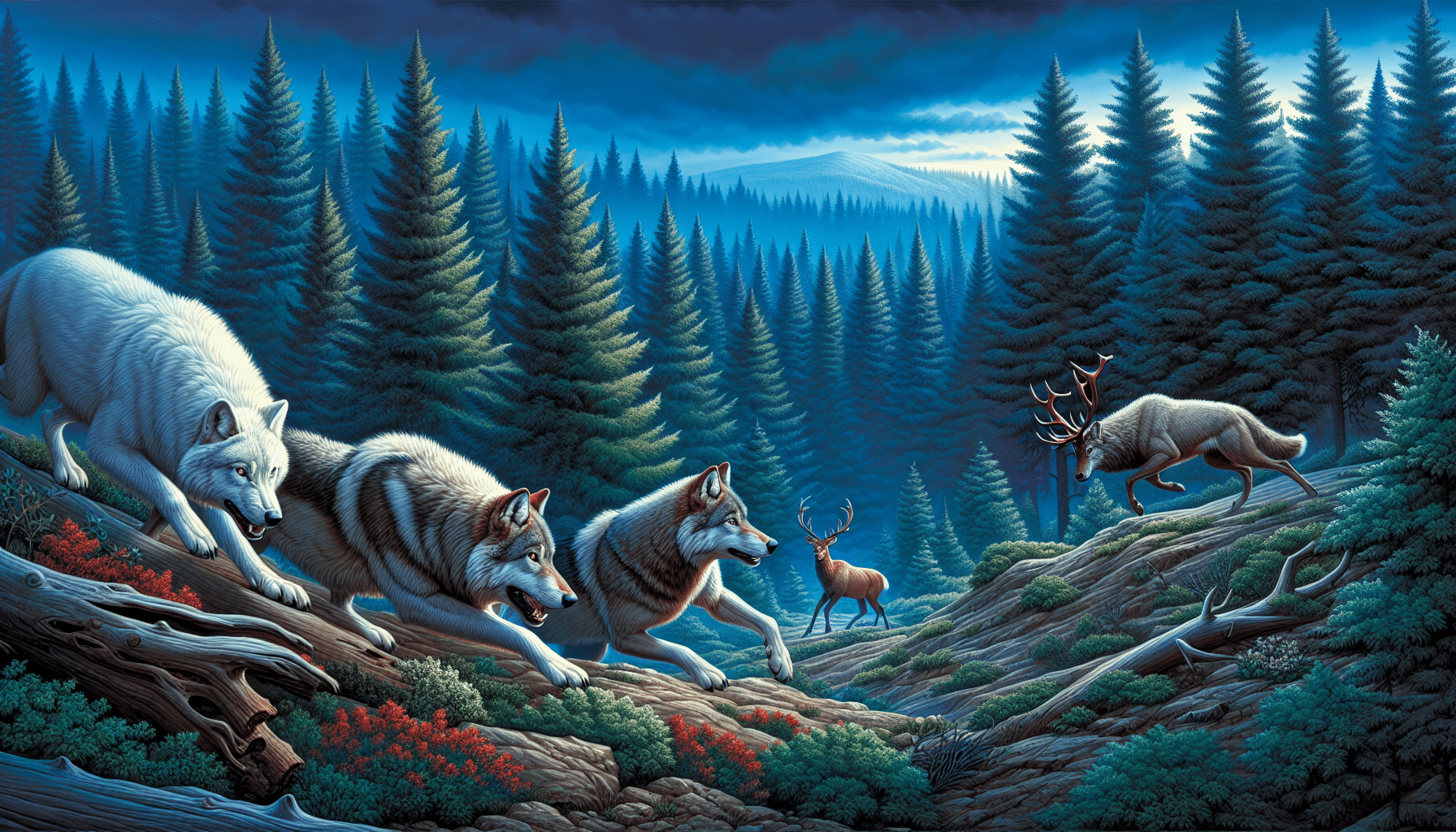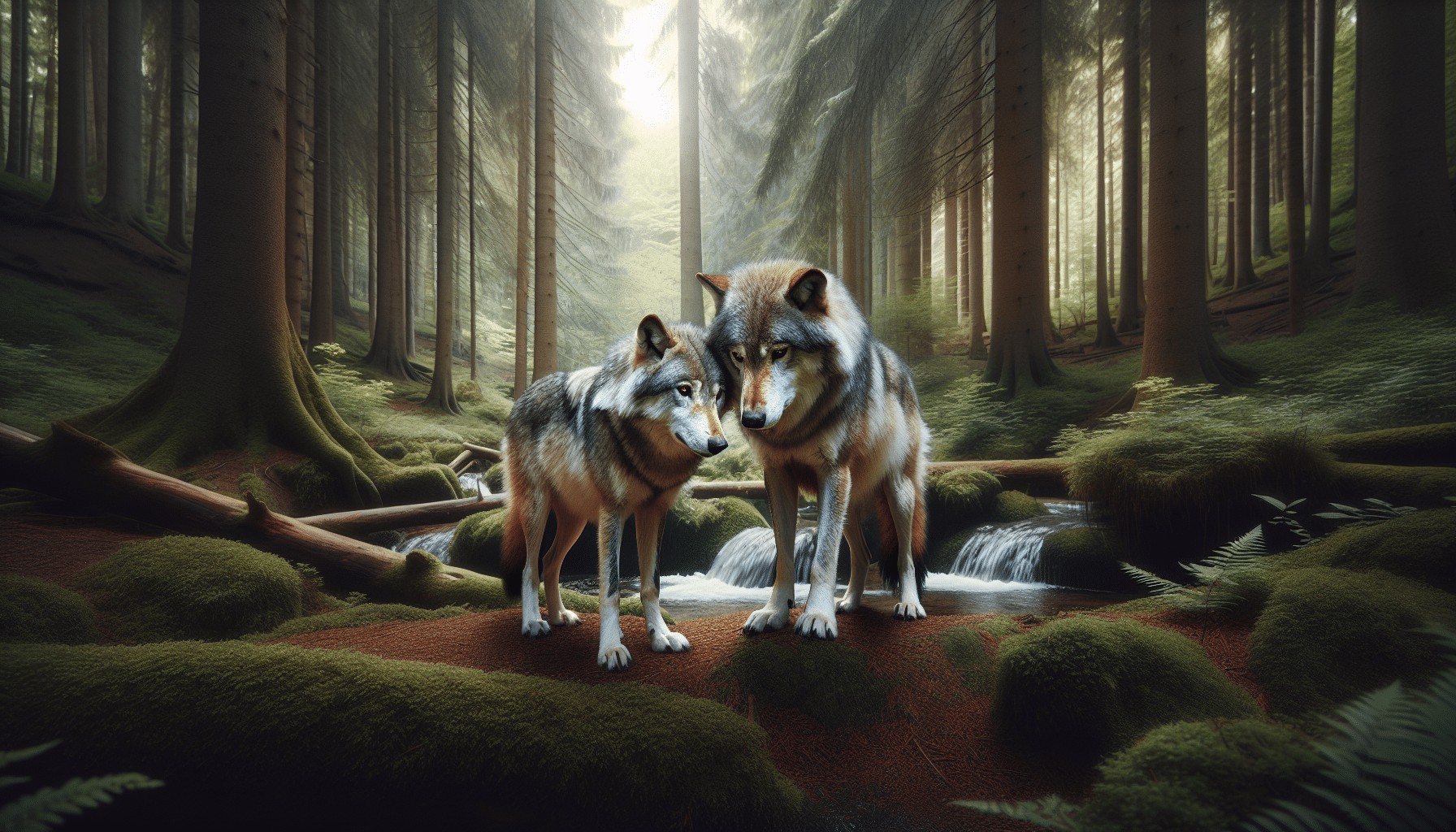
Detailed depiction of a Himalayan Wolf, scientifically known as Canis lupus chanco, in its natural habitat. The sceneries surrounding the wolf should show the mountainous regions of the Himalayas with a typical alpine ecosystem. Include animals, of which the wolf might be a predator, in the background, keeping a distance. The wolf is captured with a posture that exhibits its magnificent physical attributes such as its thick coat and robust body. No human element, text elements, brand names or logos are present in this picture.

Himalayan Wolf (Canis lupus chanco)

Introduction to the Himalayan Wolf The *Himalayan Wolf* (*Canis lupus chanco*) is among the most intriguing predators found in the mountainous regions of Central and

Visualize the article title 'Tundra Wolf (Canis lupus albus)' as a detailed scene. The setting is an expansive snowy tundra under a clear star-studded winter skies. In the middle, a majestic Tundra Wolf with its dense white coat is prowling, its clear blue eyes fixed on something afar. Its thick fur is ruffled by the chill arctic wind. Surrounding the wolf are patches of dwarf shrubs peeking out from the blanket of frost. Do not incorporate any human presence, logos, brands, or textual descriptions within the scene.

Tundra Wolf (Canis lupus albus)

Understanding the Tundra Wolf The tundra wolf, scientifically known as Canis lupus albus, is a fascinating species of gray wolf primarily inhabiting the tundra and

A vivid and detailed image of a Maned Wolf, also known by its scientific name, Chrysocyon brachyurus. This solitary, nocturnal creature is beautifully portrayed in its natural habitat of South America's open and semi-open habitats. The wolf's long, thin legs contrast starkly with its thick, reddish fur, making it a truly unique sight. Its black mane is erect, signaling alarm or warning in the wild. Creating a sense of isolation, focus only on the wolf and the surrounding foliage and land, omitting any human presence or man-made objects from the scene.

Maned Wolf (Chrysocyon brachyurus)

Introduction to the Maned Wolf (Chrysocyon brachyurus) The Maned Wolf, scientifically named Chrysocyon brachyurus, is an intriguing species known for its unique appearance and behavior.

A digital painting of a Eurasian Wolf, scientifically known as Canis lupus lupus, in its natural habitat. The wolf displays the typical characteristics of its species with its dense grey and white fur, sharp yellow eyes, and a muscular build. The wolf is caught in mid-stride, displaying its agility and power. Its environment reflects a northern Eurasian forest: lush, deep-green pines, a carpet of snow, and glimpses of a distant mountain range under a cloudy sky. No text, human figures, or brand logos are present in the artwork.

Eurasian Wolf (Canis lupus lupus)

Introduction to the Eurasian Wolf The Eurasian Wolf, scientifically known as Canis lupus lupus, is one of the most widely distributed subspecies of the Gray

An observation of the natural habitat of the Ethiopian Wolf (Canis simensis). Depict a rugged, mountainous terrain sweeping under a sky brushed with hues of orange and purple, symbolizing the advent of dusk. The Ethiopian wolf, a slender, long-legged creature with fiery red and white fur, is prancing gracefully on a narrow path that meanders through the vast grasslands speckled with highland shrubs. The wolf has a sharply pointed face like that of a fox, with vivid amber eyes glowing in the fading light. In the far distance, a pack of Ethiopian wolves plays and hunts, their silhouettes matching the craggy skyline of the Ethiopian highlands.

Ethiopian Wolf (Canis simensis)

Introduction to the Ethiopian Wolf Often dubbed the world’s rarest canid, the Ethiopian Wolf (Canis simensis) is a fascinating creature primarily endemic to the Ethiopian

A realistic depiction of the Indian Wolf (Canis lupus pallipes), standing against the backdrop of a typical habitat they can be found in. The wolf is alert, with its pointed ears perked up, piercing eyes scanning the scene, and a bushy tail. Its coat exhibits the unique color scheme found in this species, ranging from tawny to light grey shades. Its environment shows dry grasslands, scrublands, and sparse forests that commonly exist in the Indian subcontinent. There shouldn't be any humans, text, logos, or brand names included in this image.

Indian Wolf (Canis lupus pallipes)

Introduction to the Indian Wolf The Indian Wolf, scientifically known as Canis lupus pallipes, is a subspecies of the gray wolf found predominantly in the

Create a serene wilderness scene featuring a puff of green pine trees and a jovial gray wolf (Canis lupus). The wolf is mid-stride, it’s fur playful both under the sunlight and shaded in parts. The wolf’s eyes are glimmering with wisdom and a touch of curiosity while its powerful muscles are seen beneath its soft, gray fur. Subtle details encapsulate the essence of wildlife—there are paw prints scattered around the territory, a flock of birds fluttering in the sky, and the trees sway gently with the steady breeze blowing across the landscape. Do not include any human figures, texts or brand logos within the scene

Gray Wolf (Canis lupus)

Introduction to the Gray Wolf (Canis lupus) The gray wolf, also known as Canis lupus, is a well-known predator and plays a crucial role in

An illustration showcasing the diversity of Asian bears. Foreground features an Indian sloth bear, with its unique shaggy dark fur and snout standing semi-upright. Middle ground shows a sun bear, native to South-East Asia, particularly distinguished by the orange crescent marking on its chest. Background portrays a Himalayan brown bear, recognizable by its long, thick fur and hump above its shoulder, wandering in a snowy landscape. All of them are shown in their appropriate habitats, highlighting wild landscapes of Asia. No humans, text, or logos are included.

Bears of Asia

The Diverse and Enigmatic Bears of Asia Mentioning the mighty bears that roam the continents vast and varied wildernesses often conjures images of North Americas

A pristine Arctic landscape sprawling with shimmering snow. Several polar bears are scattered across the scenery, their white fur nearly blending in with the snowdrifts. The sky is a frosty blue, dotted with drifting snowflakes. A mother bear is leading her young across a vast expanse of ice, while a solitary male ambles over a snow-covered ridge. Majestic icebergs jut out of the glacial waters, offsetting the vast white scenery. There are no humans, text, brands, or logos in the image and the scene carries a peaceful, untouched vibe.

Bears of the Arctic

Understanding the Majestic Polar Bear The Arctic is a land of extremes, a domain where only the most adaptable and resilient can thrive in the

Visualize a scenic forest landscape enveloped by the warm hues of sunset. Among the foliage of bushes, a few mystical bears with a distinct blueberry-hued fur can be seen foraging. They are in different sizes ranging from large adults to smaller cubs. These unique creatures have a charming glow upon their fur, similar to the glint of ripe blueberries. Intersperse the scene with tasteful hints of wild blueberry plants swaying against the backdrop of towering trees. Do not include human figures, text, or brand logos in this composition.

The Fabled “Blueberry Bears”

Unraveling the Mystery of Blueberry Bears Have you ever crossed paths with a rumor so enthralling it seemed straight out of a fantasy? The term

An illustration of an idealized rifle specifically designed for hunting grizzly bears. The rifle is extremely detailed, focusing on features like a high-powered scope, large-caliber barrel, and a sturdy stock. It is depicted in an outdoor setting, with hints of wilderness around it, suggesting its use in a grizzly bear habitat. The image is devoid of people, text, brand names, or logos, emphasizing the subject matter: the rifle and its intended purpose.

Best Rifle to hunt a Grizzly Bear

Understanding the Might of the Grizzly Bear When considering hunting Grizzly Bears, it’s essential to understand the caliber of this magnificent beast. Grizzly Bears are

A Sloth Bear.

Sloth Bear (Melursus ursinus)

Introduction to the Sloth Bear The Sloth Bear, scientifically known as Melursus ursinus, is a nocturnal, insectivorous bear species native to the Indian subcontinent. Adapted

Andean Bear in the wilderness.

Bears of South America

Understanding the Ecosystems that Support Bears in South America South America provides diverse habitats that are crucial for the survival of bear populations in the