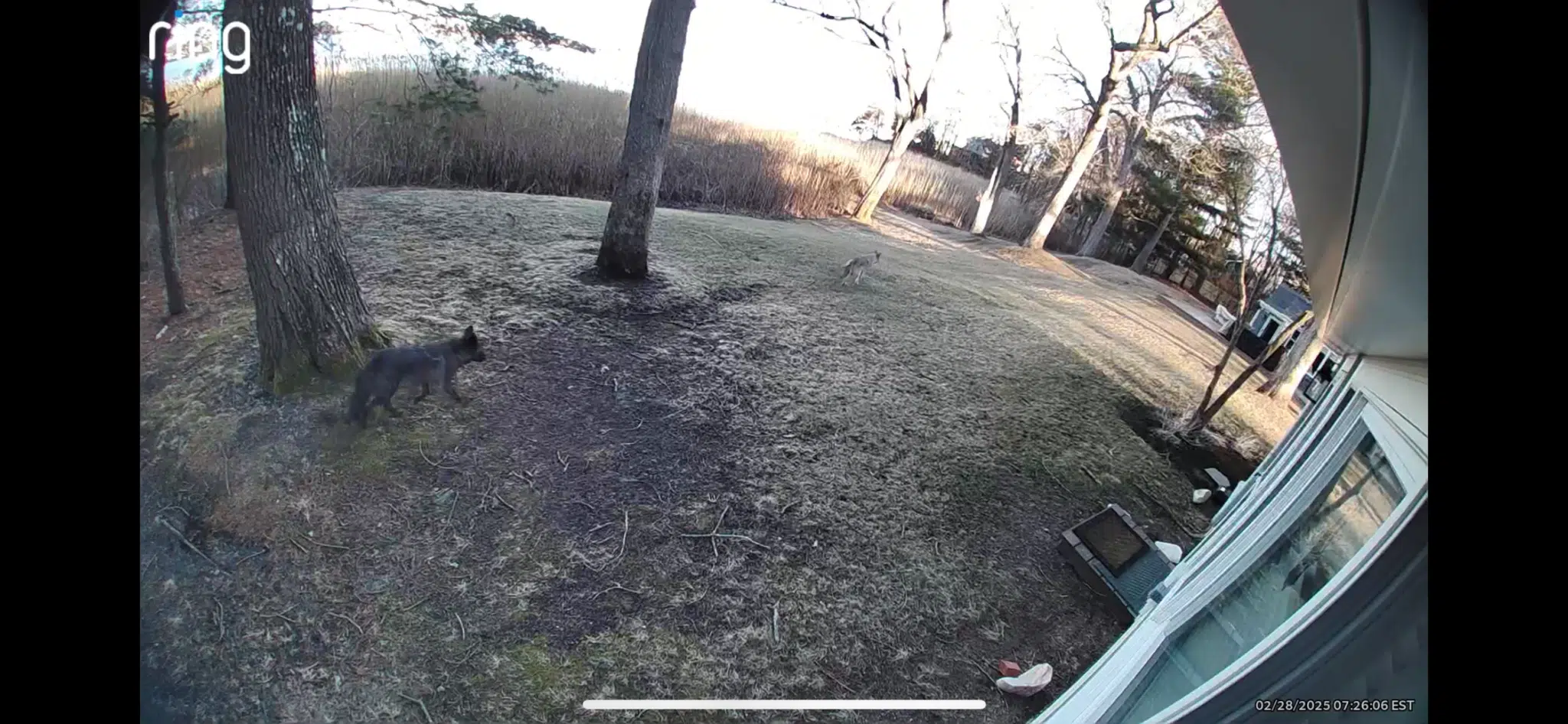
To people, coyotes are far less dangerous than their reputation suggests: bites are rare — a few dozen reported in a typical year across all of North America — and only two fatal attacks have ever been confirmed on the continent. You are vastly more likely to be seriously hurt by a domestic dog, a deer collision, or a bee sting. To small pets, however, coyotes pose a real and well-documented risk: cats and dogs under about 25 pounds can be injured or killed, especially at night and during the winter breeding and spring pup-rearing seasons. The sensible posture is respect, not fear — combined with a few simple habits that remove nearly all of the risk.
Coyotes (Canis latrans) now live in every U.S. state except Hawaii, most of Canada, and virtually every major city in between, so encounters are a normal part of modern life rather than an emergency. This guide walks through the actual record on coyote attacks, who and what is genuinely at risk, the warning signs that a particular coyote has become a problem, and what to do in the moment if one approaches you or your dog.
How Dangerous Are Coyotes to Humans? The Actual Record
Researchers who compile coyote-attack records typically count on the order of a few dozen bites or attack incidents per year across the United States and Canada — in a continent of hundreds of millions of people living alongside millions of coyotes. Most incidents cause minor injuries, and a large share trace back to a coyote that had been fed by people, either deliberately or through unsecured garbage and pet food. For comparison, domestic dogs bite millions of Americans every year and kill dozens.
Only two fatal coyote attacks have ever been confirmed in North America: a three-year-old child in Southern California in 1981, in a neighborhood where coyotes had been regularly fed, and a 19-year-old hiker killed in 2009 in Cape Breton Highlands National Park in Nova Scotia by unusually bold eastern coyotes. Two deaths in more than four decades — each tragic, and each a genuine outlier — is the full fatality record. Lightning, by contrast, kills more people in a typical single year.
When and Why Coyotes Become Dangerous
Nearly every problem coyote follows the same arc, and it starts with food. A coyote that finds reliable human-associated food — handouts, garbage, pet food, fallen fruit — gradually loses its natural wariness, a process biologists call habituation. Bold behavior escalates in stages: appearing in daylight near people, refusing to flee when hazed, following people with dogs, stalking pets, and finally nipping or biting. Wildlife agencies consistently find that feeding, not some innate aggression, sits at the root of most attacks.
Season matters too. Coyotes breed roughly from January through March, and males are more territorial and more likely to challenge dogs during those months. From April through summer, parents defending den sites will boldly escort dogs and people away from pup areas — behavior that looks like stalking but is usually territorial escorting. And any coyote that is sick, particularly with rabies, can behave abnormally: staggering, unprovoked aggression, or total loss of fear are red flags that warrant an immediate call to animal control or your state wildlife agency.
Are Coyotes Dangerous to Dogs and Cats?
This is where the risk is real. Coyotes see small pets in two ways: very small animals can register as prey, and larger dogs register as competing canids trespassing on territory. Cats allowed outdoors at night and dogs under roughly 25 pounds face the most danger, particularly in yards that back onto greenbelts, washes, golf courses, and other coyote travel corridors. Attacks on large dogs are much rarer and usually happen during the breeding season, often when an off-leash dog chases a coyote and gets led toward its packmates. Our full breakdown of what coyotes eat puts pet incidents in context — they are a tiny slice of the coyote diet, but a devastating one for the families involved.
Practical protection is straightforward: keep cats indoors, supervise small dogs outside after dark (a leash, a light, and your presence deter most coyotes), feed pets inside, and consider a coyote-proof fence — six feet or taller with a roller bar or outward angle at the top and an apron buried against digging.
What to Do if a Coyote Approaches You
The single most important rule: never run. Running can trigger a chase response in any canid. Instead, wildlife agencies universally recommend hazing — standing your ground, making yourself look large, waving your arms overhead, and shouting firmly (“Go away!”) while stepping toward the coyote. Throw sticks or clods toward (not at) a persistent animal, use an air horn or whistle if you carry one, and back away slowly only once it retreats. Pick small dogs and children up immediately. Hazing works because coyotes read confident, loud, advancing humans as a threat to avoid; it also rebuilds healthy wariness in habituated animals, which is why agencies ask residents to haze consistently rather than photograph or ignore bold coyotes.
A coyote that simply watches you from a distance, trots across a trail, or parallels you at the edge of a field is exhibiting normal curiosity or escorting behavior — not stalking prey. Escalate to authorities when a coyote cannot be hazed off, approaches people unprovoked in daylight, or shows signs of illness.
Coyotes and Children
Attacks on children are extraordinarily rare, but children under about ten are involved in a disproportionate share of the serious incidents that do occur, simply because of their size. The precautions are the same ones that protect pets: never allow coyotes to be fed, supervise small children in coyote-heavy areas at dawn and dusk, and teach kids the same response adults use — do not run, get big, yell, and move toward an adult.
Rabies and Disease: A Small but Real Consideration
Coyotes can carry rabies, but they are a minor player compared with bats, raccoons, skunks, and foxes, which account for the large majority of wild rabies cases reported in the U.S. each year. Consistent with CDC guidance: if any coyote bites or scratches you, wash the wound thoroughly with soap and water and seek medical care promptly so professionals can assess the need for post-exposure treatment — rabies is virtually always fatal once symptoms appear, and treatment before symptoms is essentially always effective. Coyotes also carry mange, distemper, and parasites that can affect dogs, one more reason to keep pets vaccinated and to discourage nose-to-nose encounters.
If your pet does tangle with a coyote, the checklist is short: separate the animals without putting hands between them (loud noise and an object to throw or thrust work better), check your pet for punctures — which can be small and easy to miss under fur — and call your veterinarian the same day, both for wound care and to review rabies booster status. Report the incident to animal control as well; agencies track coyote-pet conflicts, and a cluster of reports is often what triggers useful intervention in a neighborhood.
Why Coyotes Are Here to Stay — and Why That Is Mostly Fine
Decades of intensive removal efforts have never meaningfully reduced coyote numbers; the species compensates with larger litters and quickly recolonizes vacant territory. Meanwhile, coyotes provide quiet services most suburbanites never notice: they are prolific rodent predators and a key check on Canada goose and rodent populations in many cities. In the bigger predator picture, the coyote is a middleweight — where wolves persist, wolves dominate and even kill coyotes, as we cover in what are wolves’ predators, and deer have far more to fear from coyotes than people ever will, as our guide to what eats deer makes clear. Learning to coexist — by managing food, hazing boldness, and protecting small pets — is both safer and more effective than fear.
The Special Case of the Eastern Coyote
Residents of the Northeast sometimes hear that “their” coyotes are different, and there is truth in it. Eastern coyotes are hybrids carrying wolf and, in places, dog ancestry picked up as the species expanded around the Great Lakes a century ago; they average ten pounds heavier than western coyotes, commonly 35 to 45 pounds and occasionally more, and they are more capable deer hunters. The one fatal attack on an adult — the 2009 Nova Scotia case — involved eastern coyotes, and researchers studying that population noted unusual boldness where the animals had little history of hunting pressure and were relying heavily on deer. Even so, the eastern coyote’s record around millions of people from Maine to Virginia remains overwhelmingly uneventful; the practical advice does not change, it simply applies a size class up: haze with confidence, leash dogs in breeding season, and treat any fearless individual as a matter for authorities.
Putting Coyote Risk in Perspective
A resident of coyote country is at more statistical risk driving to the trailhead than walking it. Domestic dogs send hundreds of Americans to emergency rooms every day; deer, gentle as they seem, contribute to well over a million vehicle collisions a year with hundreds of fatalities; bees and wasps kill dozens annually. Coyotes, sharing space with the majority of the U.S. population, produce a few dozen mostly minor bites in a bad year. None of that argues for carelessness — it argues for putting effort where the risk actually lives: securing food sources, protecting small pets at night, hazing bold animals, and vaccinating dogs. Do those things and the coyote trotting across the cul-de-sac at dawn is exactly what it looks like — a wild neighbor on its way somewhere else.
Should I be afraid of a coyote in my neighborhood?
A coyote passing through a neighborhood, even in daylight, is normal and not by itself cause for alarm — daytime activity alone does not mean an animal is sick or dangerous. Watch for the real warning signs: refusal to retreat when hazed, following people, approaching leashed dogs, or visible illness. Report those behaviors to your local animal control or state wildlife agency.
Will a coyote attack a human unprovoked?
Almost never. The overwhelming majority of bites involve a coyote that had been fed by people, a person breaking up a coyote-dog fight, or a rabid animal. Unprovoked predatory attacks on adults are among the rarest forms of wildlife conflict in North America.
Are coyotes more dangerous at night?
Coyotes are most active from dusk through dawn, so pet-related incidents cluster at night, and small pets should be supervised then. The risk to humans barely changes — but carrying a light and keeping dogs leashed after dark in coyote country is smart.
What size dog is safe from coyotes?
There is no absolute line, but risk drops sharply above roughly 25 to 30 pounds, and attacks on dogs over 50 pounds are rare and almost always territorial disputes during the winter breeding season rather than predation. Any dog is safer leashed, and no dog should be allowed to chase a coyote.