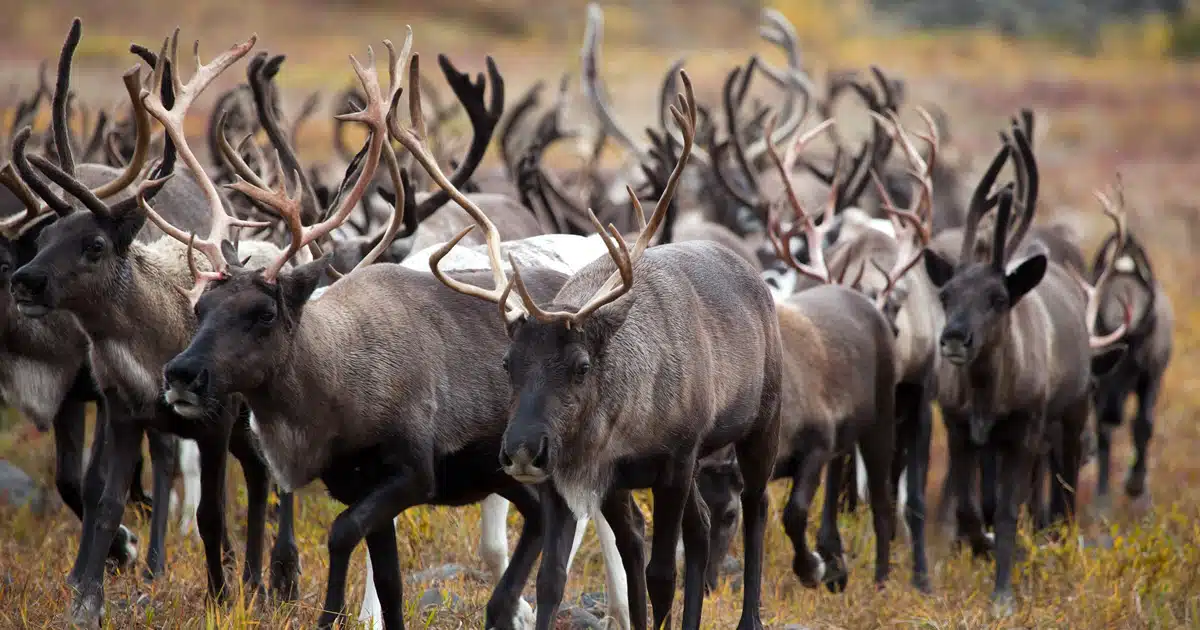
Caribou are not endangered as a species, but their overall picture is genuinely worrying. The IUCN lists Rangifer tarandus — the single species that includes both caribou and reindeer — as Vulnerable, reflecting substantial declines across much of its global range in recent decades. The honest answer depends on which caribou you mean: some populations remain reasonably healthy, others have declined steeply, and a few — like Canada’s boreal woodland caribou and Peary caribou — are formally listed as threatened or endangered at the national level.
“Are caribou endangered?” turns out to be one of those questions where a one-word answer would mislead you in either direction. Caribou still number in the millions worldwide — and yet many individual herds are in serious trouble. Let’s unpack how both things can be true at once.
One Species, Many Very Different Situations
Caribou and reindeer are one species spread across the entire top of the world, divided into subspecies and, more importantly for conservation, into distinct herds and populations that live very different lives. Conservation status is assessed at several levels, and they don’t always agree:
- Globally, the IUCN Red List classifies the species as Vulnerable — one step below endangered — because of significant range-wide declines over recent decades.
- In Canada, several caribou populations are federally listed: boreal woodland caribou are listed as threatened, Peary caribou have been assessed as threatened after earlier endangered status, and some southern mountain populations are considered endangered. Canada treats different caribou populations as separate conservation units precisely because their fortunes differ so much.
- In the United States, the woodland caribou population that once reached the Lower 48 is gone from the wild there — the last animals were moved to Canada around 2019 — while Alaska’s herds are managed as game populations, not endangered species.
- In Eurasia, wild reindeer have declined in parts of Russia and Scandinavia, while millions of semi-domesticated reindeer live under herding cultures — a very different situation from wild herds.
So a barren-ground caribou in a large Alaskan herd and a woodland caribou in a shrinking pocket of British Columbia forest are the same species with very different outlooks.
Which Caribou Are in the Most Trouble?
Boreal and mountain woodland caribou
Woodland caribou need large tracts of old, undisturbed forest rich in lichen. Logging, roads, and energy development have carved that habitat into fragments — and the changes do something subtle and deadly: disturbed, regrowing forest attracts moose and deer, which in turn support more wolves, and those wolves encounter and kill more caribou. Several small southern herds have blinked out in recent decades, and others survive only with intensive management.
Migratory tundra herds
The huge barren-ground herds famous for their long migrations have always cycled up and down over decades — that part is natural. What has alarmed biologists is that in recent decades many major herds across North America declined at the same time, some of them steeply, including herds that once numbered in the hundreds of thousands. A few herds have stabilized or begun to recover; others remain far below their historical peaks. Numbers change year to year, so current herd estimates are best checked with wildlife agencies directly.
High Arctic specialists
Peary caribou and other island populations live at the knife’s edge of what the Arctic allows. Their greatest enemy is freezing rain: icing events can seal their food under an impenetrable crust, causing sudden die-offs. As the Arctic climate produces more rain-on-snow winters, these small populations face growing risk.
Why Caribou Are Declining
No single villain explains the trend; several pressures stack on top of each other:
- Climate change. Warmer, more variable Arctic weather brings icing events that lock away winter food, earlier springs that can throw off migration timing, worsening insect harassment, and shifting vegetation on the tundra.
- Habitat loss and fragmentation. Roads, pipelines, mines, logging, and other development break up the big, quiet landscapes caribou depend on — a particular crisis for woodland caribou.
- Predation dynamics. Human-altered landscapes can tilt the predator-prey balance against caribou, as with the moose-wolf dynamic in disturbed forests.
- Disturbance and harvest. Industrial activity can displace herds from preferred habitat, and harvest — though carefully managed and central to northern Indigenous cultures and food security — adds pressure on herds already in decline.
Reasons for Hope
The caribou story isn’t all decline. The species remains widespread, with millions of animals across the circumpolar north — caribou are still among the most numerous large wild mammals on Earth. Some herds have grown or stabilized even as neighbors declined, a reminder that caribou populations are naturally dynamic.
Serious recovery work is underway, much of it led or co-managed by Indigenous communities: protecting calving grounds, restoring and reconnecting habitat, maternity-pen programs that shelter cows and newborn calves, and cooperative harvest management across borders. Caribou are resilient animals — give a herd enough intact, quiet landscape, and it has every chance to persist.
Monitoring has improved dramatically, too. Satellite collars now let biologists follow herds across their entire annual range, aerial photo surveys track population trends, and long-running community-based monitoring programs add generations of Indigenous knowledge to the picture. We understand caribou declines far better than we did a few decades ago — the harder part is acting on that understanding at the scale caribou need, which is measured in whole landscapes rather than single parks.
Frequently Asked Questions
Are reindeer endangered too?
Reindeer and caribou share one species and one IUCN listing: Vulnerable. In practice, wild reindeer in parts of Eurasia have declined much like North American herds, while the millions of semi-domesticated reindeer kept by herding peoples are not endangered — though herders face their own mounting challenges from climate change and shrinking pastures. The caribou vs reindeer distinction matters less here than the wild vs domesticated one.
How many caribou are left in the world?
Precise counts don’t exist — these are animals scattered across some of the remotest land on Earth — but the global population, wild and semi-domesticated together, is generally estimated in the several millions. The concern isn’t the raw total; it’s the trend, with the IUCN citing declines on the order of 40 percent across the wild range over recent decades, and the fact that individual herds can fall much faster than the species as a whole.
Are any caribou already extinct?
Yes — at the level of subspecies and local populations. The Queen Charlotte Islands’ Dawson’s caribou disappeared in the early twentieth century, and a number of local herds, including the last herds of the contiguous United States, have been lost more recently. The species survives, but its range keeps quietly contracting at the southern edges — which is exactly why the remaining deer species and subspecies of the far north get so much conservation attention.